
NEWS FROM AROUND THE GLOBE BROUGHT TO YOU BY THE ICBC

Author: Frank Schuler

Frank Schuler is originally from Switzerland and reports on cannabis industry and policy news from around the world.
parkinsons disease

Researchers In Norway Explore Cannabis Treatments And Parkinson’s Disease

Parkinson’s disease is a condition that attacks the nervous system and involves the patient experiencing tremors, muscular rigidity, and slow, imprecise movements. The condition seems to mainly affect middle-aged and elderly people.

Scientific research has found that Parkinson’s disease can be caused by both genetic and environmental conditions, although there is still a great deal about the condition that is unknown.

It is estimated that as many as 10 million people suffer from Parkinson’s disease worldwide, with men being 1.5 times as likely to be diagnosed with the condition compared to women.

Researchers in Norway recently examined cannabis as a form of treatment for Parkinson’s disease, and the results provide hope. Below is more information about it via a NORML news release:

Bergen, Norway: Patients with Parkinson’s disease (PD) often report symptomatic benefits from the use of cannabis, according to survey data published in the journal Acta Neurologica Scandinavica.

Norwegian investigators surveyed cannabis use patterns and related attitudes among PD patients. Consistent with prior surveys, they reported that a significant minority of PD patients consume cannabis for symptom relief. Respondents were most likely to report improvements in motor function, sleep, and pain as a result of their marijuana use.

Observational trial data has determined that cannabis inhalation is associated with improvements in tremor, rigidity, pain, sleep, and bradykinesia (slowness of movement) in patients with PD. Placebo-controlled trial data has also determined that acute CBD administration (300mg) is associated with a statistically significant reduction in experimentally-induced anxiety and tremor in PD patients.

Full text of the study, “Cannabis use in Parkinson’s disease: A nationwide online survey,” appears inActa Neurologica ScandinavicaAdditional information on cannabis and PD is available from NORML.

norway, parkinsons disease

argentina flag

Argentina’s Supreme Court Upholds Medical Cannabis Cultivation Rights

Medical cannabis advocates have tried for many years to get home cultivation officially approved in Argentina. Unfortunately, it has been a very slow process.

As we have mentioned in previous coverage, in 2017 lawmakers in Argentina passed a law that legalized cannabis for medical use. For the next few years, the new law essentially proved to be nothing more than symbolic as industry rules and regulations went nowhere.

In late 2020 Argentina’s President Alberto Fernández signed a decree calling for the legalization of home cultivation along with allowing pharmacies to sell medical cannabis products.

The catch to the 2020 decree, which is essentially the same catch that has hindered Argentina’s medical cannabis program since 2017, is that it relied on the creation of rules and regulations pertaining to licenses. Before someone can cultivate medical cannabis in Argentina they must first obtain a license from the government, and there essentially is no effective licensing process in place.

Medical cannabis advocates have pursued various legal remedies, and Argentina’s Supreme Court recently rendered a landmark decision that provides some legal protections for home cultivation. Per El Destape (auto-translated to English):

The Supreme Court of the Nation unanimously ratified the decriminalization of the use of cannabis for medicinal purposes and made it compulsory to register it in the official records for those who want to carry out this practice . The highest court ruled in this regard when evaluating the proposals of the Medicinal Cannabis Moms Association (Macame) of Santa Fe, which had questioned the constitutionality of the rules regarding the self-cultivation of cannabis for medicinal use by minors in their care.

“The public health and safety reasons involved are sufficient to justify the State issuing administrative authorizations within the framework of Law 27,350 for self-cultivation and the production of products derived from cannabis for medicinal purposes. This determines, in turn, that the intervention of the State in this area does not imply an unjustified interference in the personal autonomy of article 19 of the National Constitution”, he stressed.

Ultimately, what is needed is a fully functioning medical cannabis program in Argentina so that there is no room for doubt when it comes to the rights of medical cannabis patients.

Every patient should be able to cultivate cannabis legally based on codified laws that law enforcement is mandated to follow. Whenever patients have to rely on case law in the absence of codified law, it always creates situations that are ripe for selective enforcement which no patient should ever have to deal with.

argentina

Guernsey

Lawmaker Survey Finds Strong Support For Cannabis Reform In Guernsey

Guernsey is an island located within the English Channel off the coast of Normandy. It’s part of the Bailiwick of Guernsey, a British Crown Dependency. It’s likely not the first place that comes to mind when thinking about cannabis reform.

However, there is growing support for cannabis reform in Guernsey, including within lawmaker circles. The Guernsey Press recently analyzed survey answers involving lawmakers and their views about cannabis policy. Per the Guernsey Press:

Although some answers were nuanced or not particularly clear, we can work out that more than half of Guernsey deputies – Alderney representatives in the States were not involved – were supportive of the medicinal use of cannabis.

More than half were again supportive towards looking again at the way cannabis is regulated.

And about 40% were open to some form of legalisation of the Class B drug for personal use.

It’s always a nuanced thing when lawmakers express general support for cannabis reform, in that their support is just that – general. It doesn’t provide insight into what specific provisions they may support.

Do they support home cultivation? Do they support a regulated industry? There are a number of policy components that go into cannabis policy reform, and any number of them could result in a lawmaker switching from ‘supportive’ to ‘opposed.’

Still, the survey results from Guernsey are encouraging. It could definitely be worse, with the numbers flip-flopped. Thankfully, that is not the case.

Guernsey

calgary alberta canada flag

Study Finds Most Likely Reasons For Canadian Medical Cannabis Use

People use cannabis for a variety of reasons, including and especially wellness purposes. Whereas cannabis prohibition is a relatively new policy phenomenon, the use of cannabis for medical purposes by humans goes back many centuries.

The cannabis plant is arguably the most versatile plant on earth, possessing the ability to effectively treat a number of ailments, as proven by a growing body of research and a seemingly never-ending list of personal testimonials.

A team of researchers in Canada recently surveyed medical cannabis patients to try to determine the most common reasons for medical cannabis use. Below is more information about the researchers’ findings via a news release from NORML:

Quebec City, Canada: Canadians who consume cannabis for purposes of self-medication most frequently report doing so to address pain, anxiety, sleep disturbances, and depression, according to data published in the Journal of Cannabis Research.

Canadian researchers surveyed 489 subjects who purchased cannabis products at adult-use retailers, but who acknowledged doing so to self-medicate. Consistent with prior data, respondents were most likely to report consuming cannabis products to mitigate anxiety (70 percent), improve sleep (56 percent), alleviate pain (53 percent), and address feelings of depression (37 percent). Subjects were also likely to acknowledge using cannabis to alleviate muscle spasticity, migraine, nausea, and symptoms of post-traumatic stress.

Survey respondents typically reported using cannabis flower and selecting products dominant in THC. However, those respondents that exclusively defined their cannabis use as medical-only expressed a preference for CBD-dominant products.

In contrast with other surveys, most respondents acknowledged reporting their cannabis use to their health care professionals.

The results of another recent survey, published in the journal Complimentary Therapies in Clinical Practice, similarly determined that patients certified to use medical cannabis in the US most commonly do so to treat symptoms of pain, anxiety, post-traumatic stress, and depression. The results of yet another recent survey, conducted by Harris Polling, also found that consumers most often report consuming cannabis to reduce stress, improve sleep, and mitigate anxiety.

Separate survey data compiled in April reported that 21 percent of US Medicare recipients acknowledge consuming cannabis for therapeutic purposes, typically to address symptoms associated with chronic pain, anxiety, and depression.

Full text of the study, “A description of self-medication with cannabis among adults with legal access to cannabis in Quebec, Canada,” appears in the Journal of Cannabis Research. Additional information on the use of cannabis for chronic pain is available from NORML.

Canada

cannabis flower bud nug

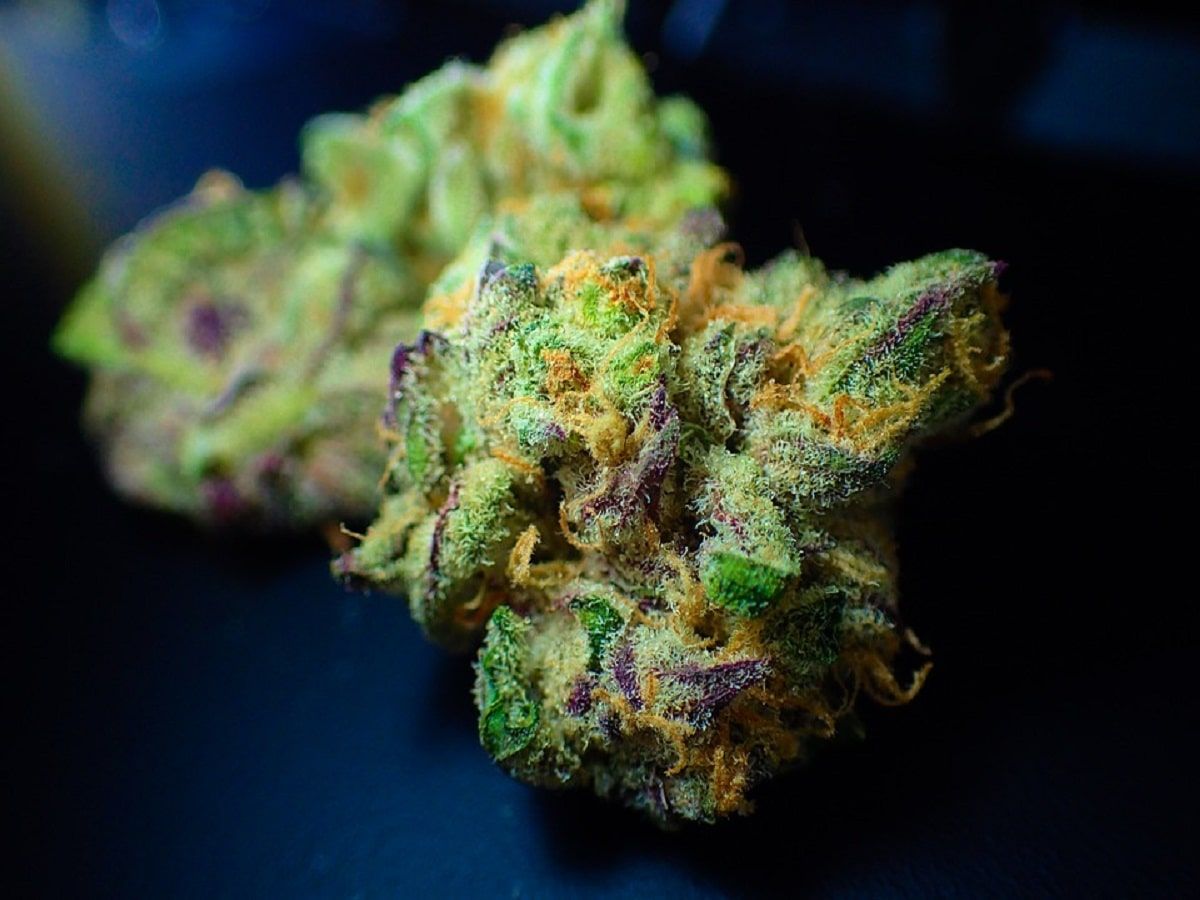
Cannabis Flower Continues To Dominate In North America

For many decades cannabis essentially came in only two forms – cannabis flower and cannabis hashish. If you were lucky then you perhaps had a friend or family member that could make topicals and/or edibles at home.

These days, if you live in North America where legal cannabis products are bought and sold, then you know firsthand how much variety exists at most licensed outlets.

Cannabis products come in all shapes, sizes, and types in those areas, from cannabis-infused sodas to cannabis-infused cotton candy and just about anything else that the mind can imagine.

Yet, despite the exponential growth in cannabis product options, the old-fashioned form of cannabis flower still reigns supreme in North America’s legal markets according to a recent study. Below is more information about it via a NORML news release:

Santa Monica, CA: Cannabis consumers in the United States and Canada predominantly consume marijuana flower instead other product formulations, according to data published in the International Journal of Drug Policy.

Investigators affiliated with the RAND Drug Policy Research Center in California and the University of Waterloo in Ontario, Canada assessed cannabis consumption patterns in the US and in Canada in a cohort of more than 40,000 subjects.

Consistent with prior surveys, they reported, “Dried flower was the most commonly used product” among consumers – regardless of whether those consumers patronized either the licit or illicit marketplace. However, investigators acknowledged that the popularity of other formulations of cannabis, particularly vape oils and edibles, had increased in recent years – especially in markets where cannabis products are legally available from licensed retailers.

Authors concluded: “The current study provides one of the most comprehensive assessments of cannabis consumption at the population level in Canada and the US to date. The findings highlight the rapidly evolving nature of the cannabis product market, including notable shifts in the types of cannabis products used by consumers. … Although dried flower continues to dominate the market, it has begun declining with a notable shift towards increasing popularity of processed cannabis products.”

Full text of the study, “Trends in the use of cannabis products in Canada and the USA, 2018 – 2020: Findings from the International Cannabis Policy Study,” appears in the International Journal of Drug Policy.

north america

indonesia

Indonesia Exploring Medical Cannabis Reform

Indonesia is home to some of the harshest cannabis penalties on earth. In fact, people can still receive the death penalty as a punishment for certain cannabis offenses in Indonesia.

Thailand, which shares a maritime border with Indonesia, recently implemented a new cannabis policy that significantly boosted access to cannabis, and people had to be reminded that if they brought cannabis into Indonesia from Thailand that they could be put to death.

Given that background and context, it was significant earlier this week when officials in Indonesia expressed a willingness to explore medical cannabis reform. Per Bloomberg:

Indonesian lawmakers will discuss a plan to legalize marijuana for medicinal purposes, after a mother’s plea for the treatment for her child spread widely online.

Legislators will study the plan with the health ministry, parliament’s Deputy Speaker Sufmi Dasco Ahmad said in a statement on Tuesday. Any changes would be done by revising the narcotics law, which bans the use of cannabis except for certain research purposes, he added.

Santi Warastuti went viral for joining Jakarta’s crowded car-free day on Sunday while bringing a placard that said, “Help, my child needs medical marijuana.” Her child has cerebral palsy. Dasco met Warastuti in Jakarta on Tuesday, and vowed to raise the issue with legislators who are deliberating the law.

Medical cannabis reform has swept the globe in recent decades, particularly in the Western Hemisphere and Europe. Asia has been much slower to reform its laws, although that is changing.

It’s likely a safe bet that if Indonesia does legalize cannabis for medical use, which is a huge ‘if’ to be sure, the policy that they implement will be extremely strict.

One thing working in every country’s favor in the region is Thailand’s new cannabis policy, which is demonstrating in real-time that reform is better than prohibition. Hopefully that is a fact that is not lost on lawmakers in Indonesia (and elsewhere).

indonesia

pakistan flag

Pakistan’s Ministry Of Science And Technology Is Forming Cannabis Authority

Industrial hemp is legal in Pakistan, with the country harvesting its first legal hemp crop late last year. Unfortunately, all other forms of cannabis are still prohibited in the conservative country.

Pakistan’s Ministry of Science and Technology wants to change that. Despite Pakistan never allowing cannabis consumption in the modern era, the Ministry is ramping up a push to reform the country’s cannabis laws to permit some type of use. Per Pro Pakistani:

The Secretary of the Ministry of Science and Technology (MoST) said that Pakistan can generate $8 billion in revenue within four years by implementing a policy on cannabis.

He stated this during a meeting of the Standing Committee on Science and Technology under the chairmanship of Senator Shafiq Tarin.

The committee discussed that the government could earn $2 billion in revenue in a matter of months by developing a policy on cannabis use.

Based on the experiences of other nations, the projections and timelines being floated in Pakistan are likely a bit too ambitious. It will take time to successfully transition Pakistan from complete prohibition to a thriving industry capable of yielding billions in public revenue.

However, the fact that Pakistan is pursuing cannabis reform in any fashion is a good thing. Just as prohibition has failed everywhere else on earth, it’s a failed public policy in Pakistan as well.

pakistan

switzerland flag

Switzerland Consumes About 56 Tons Of Cannabis Annually

The European continent is undergoing a significant shift when it comes to cannabis policy, and in many ways, Switzerland is at the forefront of it. Low-THC cannabis products (less than 1%) have been legally bought and sold nationwide in Switzerland since 2017.

Switzerland is also one of a handful of countries in Europe that is home to a relatively new concept known as localized cannabis pilot programs. Essentially, the programs allow limited adult-use industries to operate in certain cities as part of a research program.

A team of researchers with the UNIGE and the consulting firm EBP recently conducted a survey looking at the economic impact of Switzerland’s current regulations and policies.

“The Federal Office of Public Health (FOPH) in coordination with the cantons of Geneva, Basel-Stadt as well as the cities of Berne and Zurich have financed a study that adds previously unavailable information to this discussion from an economic perspective.” the researchers stated.

One of the main findings of the study is that Switzerland consumes an estimated 56 tons of cannabis annually. As of 2020, Switzerland’s usage rate was estimated to be outsdie of the top 10 usage rates globally, and it will be interesting to see if these new estimates shift Switzerland’s ranking within the global community.

This recent study found that the cannabis industry’s ‘total gross value added’ to Switzerland’s economy was comparable to that of the nation’s production of cars and car parts, and that the cannabis industry’s workforce “is similar to the employment generated by the Swiss accident insurance.”

“The study comes precisely at the right time as the commission for social and healthcare issues of the national assembly has recently started a legislative proposal regarding the legalisation of cannabis. The results show that both the current illicit market as well as a liberal commercial market inflicts costs on the public while individuals generate big profits. We thus need a well-regulated market that ensures both protection for children and adolescents as well as health protection measure.” stated Adrian Gschwend, head of policy and implementation at the FOPH.

“During the heroin prescriptions in the 1990s the deciding element was the suffering of people which led to a public indignation and a discussion on the solution of the drama. Subsequently, evaluations led to a stabilisation of this policy approach. For cannabis policy the same elements are relevant even though the suffering was not visible for a long time. Only recently the public discussion has started to pay attention to the suffering caused by prohibition. This study does not specifically address the suffering and also does not show, which regulation is preferable from a moral point of view. Instead, it provides welcome and necessary information on the economic effects of current and alternate regulatory scenarios which will add a new quality to the legislative process on cannabis regulation.” stated Dr. Sandro Cattacin, Full Professor at the Department of Sociology of the University of Geneva.

Switzerland

pharmacy

Medical Cannabis Coming To Pharmacies In Spain?

Spain has long been home to one of the most vibrant and amazing cannabis communities on earth. Cannabis is relatively easy to acquire, and it’s some of the best cannabis on earth.

Unfortunately, Spain’s cannabis policies have yet to catch up to what is actually happening in society in the European country. Despite cannabis clubs being located in many parts of the country, they are still considered to be operating in a legal gray area at best, or outright illegal at the national level at worst.

Medical cannabis policy is particularly wonky in Spain, in that there are licensed medical cannabis producers, however, they are currently only allowed to export their products or use them to supply research.

Completely legal safe access has remained elusive in Spain, however, that appears to be changing soon, at least to some extent. Per LaCerca:

The medical cannabis subcommittee of the Congress of Deputies has given its endorsement this Tuesday to the regulation of this substance for therapeutic purposes with the votes in favor of PSOE, United We Can, Citizens, PNV and PDeCAT, the abstention of ERC and Bildu, and the vote against PP and VOX.

One of the most important novelties in the conclusions of the subcommittee is that the door is opened to the dispensing of medical cannabis in community pharmacies, as demanded, for example, by United We Can and more groups on the left.

The PSOE has had to give in on this point, since they limited it to hospital pharmacies. The final text establishes that the distribution will be with magisterial formulas with standardized cannabis extracts or preparations, which should be delivered “from the health system pharmacy network, preferably in hospital pharmacies and exploring the alternative of community pharmacies that can meet the requirements.

What is currently being proposed in Spain will serve as a band-aid versus being a comprehensive overhaul of the nation’s approach to medical cannabis.

Even if medical cannabis products were available at every pharmacy in the country, the types of products being proposed, ‘standardized cannabis extracts and preparations,’ are only helpful to a small percentage of suffering patients.

Furthermore, the list of qualified conditions currently being floated out there is very limited. A vast majority of patients are likely to keep going the same route that they have in the past when it comes to acquiring medical cannabis in Spain.

Spain

pain

Study Finds That Aerosolized Cannabis Significantly Reduces Pain Levels

Cannabis inhalers are not necessarily a new technology, however, they are definitely newer than some other consumption methods. It’s an emerging technology in the cannabis space.

Many medical cannabis patients would likely prefer to use an inhaler versus smoking cannabis, and I am sure that many medical professionals would prefer that patients use inhalers as well.

Researchers in Israel recently conducted a study involving a specific type of cannabis inhaler to measure its efficacy on pain among neuropathy patients. Below is more information about it via a news release from NORML:

Haifa, Israel: The administration of aerosolized cannabis via a novel inhaler is associated with long-term pain reductions in patients with neuropathy and other chronic conditions, according to data published in the journal Pain Reports.

Israeli investigators assessed the efficacy of cannabis delivered via a novel metered selective dose inhaler (The Syqe Inhaler) in a cohort of chronic pain patients. The mean daily stable dose used by patients in the study was 1.5 mg of aerosolized delta-9-THC.

Use of the inhaler over a period of several months was associated with reduced pain scores and improvements in patients’ quality of life. Some patients reported mild side-effects (typically dizziness and sleepiness) at the onset of the study, but few participants continued to report these effects throughout the duration of the trial.

Authors concluded: “Medical cannabis treatment with the Syqe Inhaler demonstrated overall long-term pain reduction[s], quality of life improvement[s], and opioid-sparing effect[s] in a cohort of patients with chronic pain, using just a fraction of the amount of MC [medical cannabis] compared with other modes of delivery by inhalation. These outcomes were accompanied by a lower rate of AEs [adverse events] and almost no AE reports during a long-term steady-state follow-up. Additional follow-up in a larger population is warranted to corroborate our findings.”

According to recently compiled survey data, nearly one in three chronic pain patients report using cannabis for treatment management. Among patients in US states where medical cannabis access is permitted, over 60 percent are qualified to use it to treat pain.

Full text of the study, “Long-term effectiveness and safety of medical cannabis administered through the metered-dose Syqe Inhaler,” appears in Pain Reports. Additional information on cannabis and chronic pain is available from NORML.

israel, pain

weighing scale obesity bmi

Cannabis Inversely Associated With Obesity In Hepatitis C Patients

It is estimated that as many as 58 million people suffer from hepatitis C worldwide. The World Health Organization estimates that roughly 1.1 million deaths occurred in 2019 due to hepatitis B and C, and their effects include ‘liver cancer, cirrhosis, and other conditions caused by chronic viral hepatitis.’

Hepatitis C is spread by contact with contaminated blood, such as from sharing needles or from people using unsterile tattoo equipment. Researchers in France recently examined the effects of cannabis use among hepatitis C patients. Below is more information about it via a news release from NORML:

Paris, France: Cannabis use is inversely associated with obesity in patients with chronic hepatitis C virus (HCV) infection, according to data published in the Journal of Cannabis Research.

A team of French researchers assessed the relationship between lifetime cannabis use and obesity in a cohort of over 6,300 HCV patients.

Authors reported, “[F]ormer and, to a greater extent, current cannabis use were consistently associated with smaller waist circumference, lower BMI, and lower risks of overweight, obesity, and central obesity in patients with chronic HCV infection. … To our knowledge, this is the first time that such associations have been highlighted for HCV-infected patients.”

The study’s findings are consistent with those of analyses of other cohorts – such as those herehere, and here – reporting that marijuana use is typically associated with lower BMI and with lower rates of obesity.

Full text of the study, “Cannabis use as a factor of lower corpulence in hepatitis C-infected patients: Results from the ANRS C022 Hepather cohort,” is available in the Journal of Cannabis Research. Additional information on cannabis and HCV is available from NORML.

France

stethescope doctor medical hospital

Cancer Patients Reduced Prescriptions, Improved Symptoms After Long-Term Cannabis Use

If you have battled cancer, or know someone that has, then you are completely aware of how awful of a condition it can be. To make matters worse, many of the current treatments for cancer come with a number of terrible side effects.

The cannabis plant has helped many cancer patients over many years in various ways, and according to a recent study in Israel, it is associated with reduced prescriptions and improvements in symptoms. Below is more information about it via a news release from NORML:

Haifa, Israel: The use of cannabis products over a six-month period is associated with statistical improvements in cancer-related symptoms as well as significant reductions in subjects’ use of prescription painkillers, according to longitudinal data published in the journal Frontiers in Pain Research.

Israeli researchers assessed the long-term use of cannabis in a cohort of several hundred oncology patients.

Consistent with studies of other patient cohorts, cannabis use was associated with symptom mitigation, improved quality of life, and reduced prescription drug use. Among those participants who completed the trial, nearly half ceased their use of analgesics.

Authors concluded: “The main finding of the current study is that most cancer comorbid symptoms improved significantly during six months of MC [medical cannabis] treatment. … Additionally, we found that MC treatment in cancer patients was well tolerated and safe. … In conclusion, this prospective, comprehensive and large-scale cohort demonstrated an overall mild to modest long-term statistical improvement of all investigated measures including pain, associated symptoms and, importantly, reduction in opioid (and other analgesics) use.”

Full text of the study, “The effectiveness and safety of medical cannabis for treating cancer related symptoms in oncology patients,” appears inFrontiers in Pain ResearchAdditional information is available from the NORML fact sheet, “Relationship Between Marijuana and Opioids.”

cancer, israel

International Cannabis Business Conference

NEWS FROM AROUND THE GLOBE

BROUGHT TO YOU BY THE ICBC

© International Cannabis Chronicle. All rights reserved. Site developed and hosted by Rogue Web Works.