NEWS FROM AROUND THE GLOBE BROUGHT TO YOU BY THE ICBC

Author: Marguerite Arnold

Canadian currency money

Canada To Spend CA $200 Million Annually On Cannabis For Veterans

The Canadian government is reimbursing more than double the amount for veterans’ cannabis reimbursement than it did just three years ago

According to newly released data, the Canadian government is on track to spend CA $200 million this year on cannabis claims for vets. This is $50 million more than last year and double what it spent just three years ago.

While experts and advocacy groups cannot pinpoint the specific reasons for this surge in demand, there are some obvious answers. The first is full legalization. The second is increased understanding and education about the impact of cannabis on the health issues that veterans tend to face. These include PTSD and brain injuries as well as other physical ailments. The third is undoubtedly the Covid Pandemic, which has seen increased use no matter the local legality of the plant.

There is also a call for more studies to understand what veterans are using the drug to treat.

Regardless, it is a very good indicator that the United States will also see a surge in demand from the same population after full legalization. The issue of reimbursed coverage is a controversial topic everywhere.

A Brief History of Canadian Veteran Cannabis Reimbursement

The federal government of Canada began reimbursing veterans for medical cannabis in 2008. At this time, such reimbursements were extremely limited and hard to get approval for. However, the change in policy was based on court rulings that stretched back for 20 years.

In 2014, Health Canada relaxed its rules about reimbursement authorizations, but did not impose limits on either expense or amount consumed. That year, the government reimbursed 112 vets at a cost of $409,000. The next year, the number of vets increased to 600 patients, and the cost increased to $1.7 million. According to government data released last June, there are now 180,000 Canadian veterans who are part of the program, at a cost of $153 million annually. This despite a 2016 decision by the government to limit use to 3 grams a day under the program, and further to impose a cost cap of $8.50 per gram. To put this in direct comparison with the civilian population, there are now 345,000 private citizens whose private insurance covers the costs.

Implications for Other Insured Populations

There are several takeaways from this data. The first is that it is clear that cannabis is working – and that the news about its medical efficacy is spreading. The second, however, which will have implications in places like Germany and the United States, is that insurers (either government-backed or private) may not like paying the costs – but it will soon become accepted – simply because there are no alternatives.

Cannabis the wonder drug has arrived. But the question of who pays for it is still an open question that no country has answers for.


Canada

prison jail

Brittney Griner Sentenced To Over 9 Years Hard Labour For Cannabis Possession In Russia

The WNBA star, arrested at the airport in February with less than a gram of cannabis oil, is bringing global attention to the issue of continued cannabis criminalization

Just one week before Russia invaded Ukraine, Brittney Griner landed in Russia with the expectation of playing her next off-season. That hope was dashed almost as soon as she landed. Officials found a few vape cartridges containing less than a gram of cannabis oil in her luggage. For this “crime” she was promptly arrested. Her subsequent detention and now conviction and sentencing has made global headlines.

Griner is a medical cannabis user, despite the fact that it is still banned by the WNBA and has been certified medically as such in her home state of Arizona since 2013. She also testified in court that she had packed the vape cartridges by accident before she left the US and did not realize they were in her luggage.

A Global Call for Decriminalization

As a local Arizona man buys 6,500 Mercury tickets to support Griner and the WNBA held a moment of silence for her on Sunday, both the US State Department and the Biden White House are working to obtain her release. This, despite the fact that cannabis use is still federally illegal in the United States, where thousands of people remain in jail because of their own cannabis use and possession.

While it appears that she was deliberately targeted for political purposes that have nothing to do with cannabis reform by the Russian government, and her case was certainly mishandled, even under Russian law, it is clear that Griner’s plight has just added fuel to the fire for the cannabis legalization cause globally.

In Germany, where recreational legalization is now slated to occur sometime in the next 24 months, the German press has covered the case with interest. It is clear, at least aus Deutschland that this is a global example of what happens when patients are unjustly prosecuted, although of course, German patients still face criminal charges when caught with “undocumented” cannabis.

What Happens Next?

It is very likely, given the increasing din domestically, that the White House will be on the hot seat until Griner is returned home. However, this incident is, tragically, not likely to move either the Senate or the White House to implement cannabis reform any time soon – even after the U.S. midterm elections which occur in the fall.

As such, Griner becomes “just” the next, if globally high-profile victim of a Drug War which has still not ended, no matter how much there appears to be a light at the end of the tunnel in several countries.

Brittney Griner, russia

germany flag

Minister Of Justice In Germany‘s Largest State Expresses Support For Cannabis Legalization

Benjamin Limbach is the new Minister of Justice of North Rhine-Westphalia and has stated that he considers the legalization of cannabis to be a German “right”

In an encouraging development for the recreational cannabis discussion, Benjamin Limbach, the Green Party-affiliated Minister of Justice and member of the state cabinet as of June, has now publicly backed recreational reform. According to Limbach, he will help implement any law the Bundestag passes in Germany’s largest state.

This is encouraging news, particularly given the battles on the ground so far in the state also referred to as “NRW,” where the city of Dusseldorf was forced to reverse its ban on CBD just last year after losing in court.

Will There Be NIMBY Issues in Germany?

While politicians of all stripes are beginning to recognize that backing the legalization of cannabis is a winning issue, there is also no doubt that reform will also, like it has in other places, instigate more local backlashes to continue to ban the legal sales of adult-use cannabis. There may also be local bans on cultivation and manufacturing.

While cannabis legalization is increasingly popular with the public as a whole, there are still many who believe that this is not a positive development.

So far, of course, this issue has not been an issue in Germany, but that is because nothing has become concrete. In neighbouring Holland, local communities protested local cannabis cultivation farms after they had been selected in a national bid.

National Law, Local Regulations

One of the more interesting questions that has so far been left unanswered is whether local jurisdictions and municipalities will be able to ban either local production or sales once recreational reform becomes the law of the land. In California, for example, despite having a legitimate legal market since 1996 and a recreational one since 2016, there are still counties and municipalities that have banned dispensaries outright.

Given the highly emotional response to cannabis use that is still present everywhere, this is likely to become a political issue post-legalization. In the meantime, continue to expect high-ranking politicians who are in the ruling government coalition to publicly support the advance of the Traffic Light Coalition policy. For the very first time aus Deutschland at least, supporting recreational reform has become not only a political game-changer but an issue politicians will back to bolster their careers.

Germany

london bridge england united kingdom britain

UK’s Top Contender For Prime Minister Criticized For U-Turn On Cannabis Reform

In an increasingly bitter and close race, Tory rival for the top political job, Rishi Sunak has criticized Liz Truss for her flip-flop on cannabis reform

The current political battle in the UK to replace Boris Johnson has gotten increasingly nasty if not out of touch with the issues that most people are now facing. The top two rivals for the Prime Minister’s office, have been slugging away at each other’s policies for weeks now.

Given this, it was inevitable that the issue of cannabis reform would surface, in some form.

Now Rishi Sunak, dubbed “Dishy Rishi” by his detractors, who would become not only the first non-white Prime Minister but the first practicing Hindu to hold the office, has gone there. Specifically, he has attacked Liz Truss, his opponent, for once supporting cannabis reform – when she was a student at Oxford and the one-time president of the Oxford Liberal Democrats.

Interestingly, Sunak, who also spent time in California while attending Stanford University to obtain an MBA degree, is not taking a stand on cannabis reform, even of the medical kind. His criticism is that Truss is a politician who will flip flop to gain political advantage and holds no fixed beliefs. She currently opposes cannabis reform as a member of the Tory party.

It is the kind of campaign not seen (yet) in the United States or Germany – two countries where the issue of federal cannabis reform is now looming. It is also a sign of how far even medical cannabis reform still has to go in the UK – forget full legalization.

Where Cannabis Reform Now Stands in Britain

The UK is now suffering from high inflation, post-Brexit woes, and a political discussion that has been warped beyond recognition because of the same. As literally millions of Britons are suffering from energy costs that have increased dramatically this year plus food and medicine shortages, the Tory leadership battle has focussed on esoteric issues that have little to do with the major problems now faced by the majority of the country.

In the meantime, the government is at a literal standstill under the lame duck tenancy of Boris Johnson, who was forced out by members of his own party after one too many scandals earlier this summer.

The issue of cannabis reform is, as a result, unlikely to become a political force on a national level in this kind of environment. Indeed, it has stagnated all over the country, even in places like the Channel Islands where local support had gelled for proceeding.

It is unlikely that the UK will be able to hold out forever, no matter who wins the current leadership contest. Indeed, it will be a potent political issue in the next national election, due to be held in the next several years.

Until then, however, look for the same old, tired excuses for failing to enact more comprehensive policies from the Tory party as cannabis patients continue to suffer and people are convicted of criminal charges even for small amounts of cannabis. There are currently an estimated 17,000 “legal” cannabis patients in Britain.

United Kingdom

US Germany

Germany Or The U.S.: Who Will Go First On Federal Cannabis Reform?

The Cannabis Administration and Opportunity Act introduced in the U.S. Senate in late July, removes cannabis from the Controlled Substances Act and allows states to legalize recreational cannabis. How are American developments stacking up to current events aus Deutschland?

Ironically, just two days after Burkhard Blienert addressed the International Cannabis Business Conference in Berlin about pending German reform and outlined a rough schedule for legislative passage, a cannabis reform bill was introduced in the US Senate by Senator Chuck Schumer (D-NY).

A Side By Side Comparison

While German politicians are still unwilling to unveil details of the pending legislation until later this fall, the US version is now available for review and debate. The American bill specifically proposes removing cannabis from the Controlled Substances Act – an issue still of some contention in Germany. Beyond this, it would create a tax on cannabis product sales, expunge the records of those with past cannabis convictions, and allows federal prisoners serving time for nonviolent cannabis convictions to petition for resentencing. The legislation, if passed, would also establish a national regulatory framework to protect public health and safety.

In Europe, things are still less specific, although first-of-their-kind multilateral talks have now been launched between Malta, Luxembourg, and Germany. Beyond the information gleaned from the hearings in June, European lawmakers are now considering how to proceed not only on a national but regional level.

One of the standing questions on this side of the pond is how individual countries and the region itself will handle the actual legalization itself, including removing cannabis from sovereign narcotics laws as well as regulations at the EU level. There seems to be less interest in dealing with issues like racial justice, although there will clearly be a discussion about how to handle those with both convictions and those who are currently in jail for nonviolent cannabis offenses.

The discussion about taxing cannabis based on the levels of THC found in products and plants appears, for now, to be just a European debate.

The Likely Path To Passage

Right now, the US Senate is the main battleground for cannabis reform. Various bills have passed the House over the last decade only to be shot down in the Senate. It is also unclear whether Schumer has enough bipartisan support to carry the bill through to passage this time – and whether, once also passed in the House, the reconciliation between both bills could happen before the midterm elections.

On the other hand, the German timetable for reform is more likely to create a bill that passes both the Bundestag and Bundesrat, and further on a timetable now alluded to by national politicians.

For these reasons, while it is also very plausible that both debates will drive each other, it seems that Germany (and beyond that Europe) is likely to take the plunge into recreational reform on a schedule ahead of the US.

Germany, united states

switzerland flag

Switzerland Legalizes Medical Cannabis And Allows Exports

The Swiss government has joined other European countries in fully legalizing medical cannabis for domestic use, and export

Switzerland is moving forward on its own path to full legalization. With a federal recreational trial pending, the country has now fully and formally legalized medical cannabis use. This has been achieved by amending the Swiss Narcotics Act to change the status of cannabis.

As a result, as of August 1, Swiss patients can obtain medical cannabis via a simple prescription from a regular doctor. Up until now, patients had to obtain special permission from the Federal Office of Public Health. The government has justified this new development by stating that the demand for authorizations has created a huge administrative burden and slowed down medical treatment.

There are currently about 3,000 authorizations for medical cannabis use in Switzerland, issued for patients suffering from cancer, neurological conditions, and MS. The authorization for exceptional use was authorized in 2019. Beyond this, there are an untold number of patients who have also obtained cannabis from the illegal market.

The Transition to Cannabis Normalization

The University of Geneva published a study in June that estimated that the economic impact of legalization in Switzerland would generate an estimated $1 billion in revenue and create about 4,400 full-time jobs. An earlier study published two years ago estimated that the value of the national cannabis market would be about half that.

Obviously, both figures are just guestimates. There is really no way to understand both recreational and medical demand until both are fully normalized.

The Impact on European Legalization

Switzerland is located in Europe but is not a member of the EU. Regardless, the steady progression here towards a normalized market has clearly helped drive the conversation elsewhere. This starts with Germany. However, it also includes countries like Malta, Luxembourg, and Portugal on the recreational side of the debate, and beyond this, Spain, Greece, Italy, and the Czech Republic on the purely medical side.

The path to legalization in Switzerland is also being achieved through a slow normalization of medical use while beginning a limited trial in key cities later this year.

As a result, it is obvious that the Swiss example will be studied and considered as other countries begin to make moves in this direction. One of the more interesting aspects of the same is that Switzerland has also effectively lifted some kinds of regulation that are applied to the industry elsewhere – including GMP and Novel Food. How this will work externally is another question as Swiss products are exported across international borders.

Regardless, the small steps Switzerland is making now will certainly forward the entire debate, both here, and in their immediate surroundings.

The future is increasingly now.

Switzerland

israel flag

The End of Israeli Public Cannabis Companies?

Before the pandemic, the Tel Aviv Stock Exchange was bubbling. Now the Tel Aviv Exchange is dropping the Cannabis Index. What gives?

In what is going to be a blow to the idea of a public cannabis company in Israel, if not beyond, the Tel Aviv Exchange has dealt another blow to the public cannabis company model. Namely, it is dropping the so-called Cannabis Index.

Just three years ago, both celebrities and public figures were being avidly recruited by Israeli cannabis companies to promote themselves to investors and raise their stock value. Much like in Canada, many Israeli companies that went public did so by merging with an existing shell company already listed on the exchange. After their debut on the exchange, at least initially, stock values soared. 18 months ago, the exchange then created its own Cannabis Index, although many doubted how useful this would be. The biggest reason for such early doubts? There were actually very few companies listed on the exchange, and as a result, it was dominated by just a few companies. In fact, the value of the exchange was mainly based on the valuation of just one company.

After soaring in value, the cannabis bubble burst, and the worth of the index has now dropped 70%, leading to the decision to delist it, as of this Thursday, August 4.

Are Public Companies the Future of The Cannabis Industry Anywhere?

While there are successful public cannabis companies, the continued roil of their worth on the public markets continues to be controversial. For example, Canopy Growth, by far the market leader both domestically and during the first expansion overseas, to Germany, was just delisted in Canada.

Part of this painful arc is the huge costs that have been required to both build certified facilities as well as gain market share. The largest companies have gotten this way by acquisition rather than organic growth.

Part of this is the growth of the industry, in all places, almost simultaneously.

In Israel, the Pandemic is also surely partly to blame.

Not all public cannabis companies are doing badly. But the reality is as the industry goes into its next iteration that public companies are not necessarily the only model, or the best one, to create a profitable company.

The Israeli exchange may be headed for extinction, but the idea of a public cannabis company is not.

For all the excitement about recreational legalization, one thing is increasingly abundantly clear. The structure of cannabis companies themselves is far from a given – and public companies may not (yet) be the best or ideal way to raise cash and conduct global operations.

While there are increasing numbers of public pot companies globally, it is also clear that there have been some gigantic missteps too.

israel

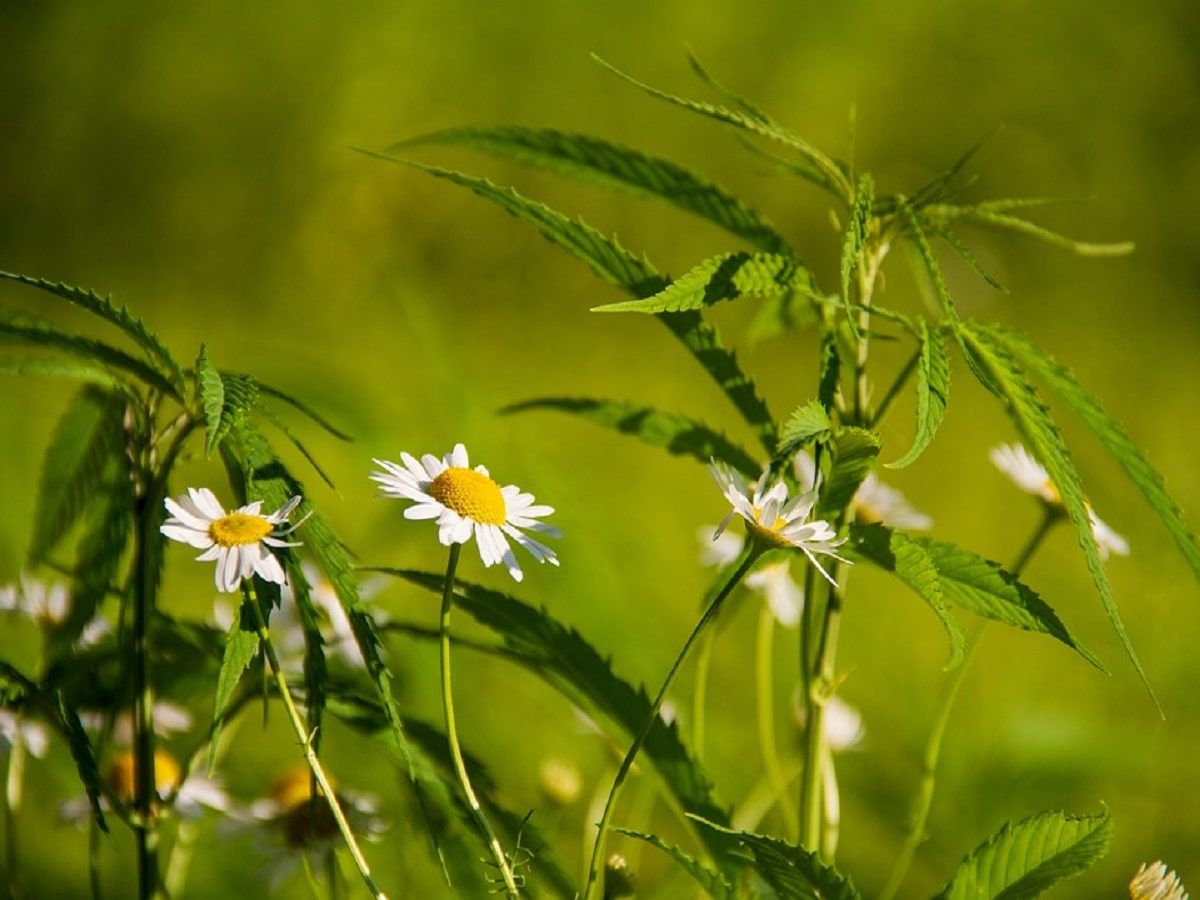
hemp plant in the wild

Hemp Increases Cow Health – And Reduces Bovine Stress

A federally funded study published in Scientific Reports suggests that hemp has similar effects on humans and cows

A US Department of Agriculture-funded study of hemp-based cattle feed, which has been underway since 2020 has begun to deliver intriguing results. Cows can completely digest all parts of the hemp plant, including stems, stalks, and other “waste” parts not used for other purposes.

Giving industrial hemp to cows appears to help them feel less stressed and may even be good for their overall health. The effects of the plant, in other words, may be similar in both humans and cattle. Furthermore, this is a very efficient use of parts of the hemp plant that are not normally used – creating a highly efficient end-use product.

This study examined 16 Holstein steers, split into two groups. One group was fed nothing more than their normal feed for a period of two weeks. The other group consumed their feed, mixed with hemp that gave each cow a daily dose of 5.5 mg of cannabidiolic acid per kilo of body weight. Blood samples were taken from all cows to understand how hemp affected each study participant.

The cows that ate CBD began to show lower cortisol and prostaglandin levels in their blood. Both of these chemicals are common markers of stress. They also spent more time lying down than the control group.

Cows who suffer elevated levels of stress, either from early weaning or cramped quarters, are more prone to developing respiratory infections or other diseases.

Despite these encouraging results, American farmers are still not allowed, by mandate of the USDA, to feed hemp to any livestock bound for human consumption. The reason is that the US government is still concerned that minute amounts of THC might linger in meat or milk from cows who have consumed the hemp plant. This latest study shows that these concerns are not valid.

Animals and Hemp

While still in its early stages, feeding animals hemp and hemp products is clearly a growth industry. Multiple studies have been conducted on dogs, with good effect. Beyond domestic animals, however, farm animals also are positively affected. A recent Thai study has found that chickens who are fed hemp-based food also need fewer antibiotics to stay healthy.

As more conclusive studies are conducted, it is becoming apparent that cannabis is not just a wonder plant for people, but for all kinds of animals as well.

hemp

burkhard blienert icbc international cannabis business conference berlin 2022

Unprecedented Speech By German Drugs Commissioner At Cannabis Conference In Berlin

The Commissioner on Narcotic Drugs at the Federal Ministry of Health spoke as the keynote address to a packed auditorium, kicking off International Cannabis Business Conference Berlin 5

For those sitting in the packed audience in the Estrel Hotel in East Berlin last Tuesday, the scene felt a bit surreal. It was a moment five years (at least) in the making. However, for those who are regular attendees of the conference and have been there from the start, it was a historic moment. Finally, a senior member of the German government was in attendance and unashamedly so. Burkhard Blienert, Drugs Commissioner for the German government, made the keynote, opening speech.

The auditorium may have been full, but beyond it, the exhibit space, also the largest it has ever been, was a testament to the growing industry that brought events, not to mention all conference attendees to this point. It is clear that no politician in Germany connected to the cannabis reform issue can ignore the annual conference.

While Blienart did not reveal any more details – except to say that the legislation is still in process and there is much to compromise about – he did clarify the timeline of legalization a bit more clearly. Namely, that a draft bill will likely be released by the end of the year, with passage to occur in 2023.

The process is now underway. If there was an analogy to be made, Germany is now about two years from the beginning of a regulated, legal, cannabis market.

Many Details Still to Be Ironed Out

While there is forward motion, it was also very clear from Blienart’s speech that nothing is done and dusted. Further, there are multiple issues still to be decided. This starts with deciding what will be a legal point of sale. While he did not say as much, other rumours coming out of Berlin of late have suggested that online sales – at least at first – will be banned.

Beyond this, there is also the issue of home grow. Blienart did not rule it out. Indeed, the rumour mill has also suggested that the first number on the table is three plants.

Taxation also remains an open question.

Regardless, it is now a certainty that legalization is not going to founder. And despite the fact that there is at least an 18-month window from this summer to legal sales, it is also clear that things will not be delayed much longer than this either.

Recreational cannabis is coming to Germany, the world’s fourth-largest economy. The conversation will never be the same.

berlin, Burkhard Blienert, german

georg wurth dhv german cannabis association

Multiple National Cannabis Missions At International Cannabis Business Conference In Berlin

Multiple economic missions had booths at the conference last week – the beginning of an international trend

While the scale of the event rivaled any corporate conference – as did the exhibit booths – one thing stood out clearly this year at the Berlin International Cannabis Business Conference last week: The arrival of cannabis missions from international locales.

Last year, both Zimbabwe and New Zealand sent economic trade envoys to the conference. This year, both New Zealand and Thailand had their own booths, promoting their country’s cannabis exports.

It is, clearly, the beginning of a wave. The International Cannabis Business Conference has, since its beginning in 2017 been the most international, high-level business conference in the world. From now on, governments will be taking notice.

It is obviously now a relatively fast-changing world. One where the governments of three European countries (Malta, Germany, and Luxembourg) met last week to begin a series of high-level meetings on changing cannabis regulation across the region.

Unprecedented Market Access

One of the most important reasons for foreign producers to work with their governments to send trade mission presence to the International Cannabis Business Conference conference is that the access created by the International Cannabis Business Conference in Berlin is unprecedented, globally. Attended by all the major producers across Europe and in Germany, along with representatives of what are now believed to be the 187 distributors across Deutschland, the conference is an unparalleled opportunity to gain market access to the cannabis market in the world’s fourth-largest economy.

From the moment you hit the conference floor, it is very clear you have just entered a cannabis zone of unique scope and size.

Not Just Germany

Beyond individual companies and trade delegations, the conference is also packed with buyers and sellers of every kind. This ranges from brokers to resellers to pan European distributors to investors.

If you are looking to buy (or sell) any kind of wholesale cannabis product across the EU, this is the place to be.

There is no major segment of the cannabis world that is excluded

What Does the Future Hold?

The International Cannabis Business Conference in just a few short years has established itself as the premiere gathering place for the global industry. This will only continue to build. Look for a bigger conference, more attendees, official delegations and of course, increasingly senior politicians and deal makers.

Within two years, this is going to be the ground zero of a recreational market. The sky may not be the limit, but it will surely go even more stratospheric!

international cannabis business conference

Europe map with pins

First Of Its Kind Multilateral EU Policy Meeting On Cannabis Held In Luxembourg

The first of many high-level meetings on the legalization of cannabis was held in Luxembourg between representatives from Germany, Luxembourg, and Malta

An unprecedented meeting occurred on Friday, July 15 – just three days before the beginning of the ICBC’s Global Investment Forum in Berlin.

Ministers from Germany, Luxembourg and Malta met for the first time to kick off a series of meetings between the countries on how to legalize recreational cannabis.

There were three sessions. Two focussed on international and European law. The third looked at the opportunities and challenges ahead as public policy and regulations change.

After the meeting, they issued a highly revealing joint statement along with personal comments from attendees. According to the Luxembourg Minister of Justice, Sam Tanson, “Almost half a century after the entry into force of our law establishing the criminalisation of drug-related behaviour, namely the law of 19 February 1973 on the sale of medicinal substances and the fight against drug addiction, Luxembourg still pursues a drug policy focused mainly on repression. However, as our statistics show, the failure of this approach cannot be denied, and the time has come to develop a new approach, based on dialogue with the states that have made the same observation and the European and international institutions.”

The Key Takeaways

For those who have been watching global developments, this multilateral meeting was actually unprecedented. Nothing has happened quite like it on the path to legalizing the plant in the last decade.

The key takeaways were equally historic. Namely:

  • The demand for cannabis – both for medical and recreational use has grown exponentially. In fact, cannabis now accounts for 39% of all illegal drug traffic in the region. Unless the underground economy is undermined, this represents a major security threat from the amount of cash that is being handed over to organized crime.
  • There is no way to control any form of cannabis unless the laws are changed, and regulations are established.
  • Law enforcement is being challenged by the fact that it is no longer possible to distinguish between cannabinoids without expensive testing.
  • There is a need for EU governments to reassess their cannabis policies which reflect changing realities as well as to strengthen social programs geared towards health and prevention rather than criminalizing use.

There is no word yet on the schedule of meetings, or whether the first group will expand the invitee list to other legalizing countries, but given the broad scope of the inquiry, it would appear that these three countries are setting the table for a European-wide discussion about all cannabis regulation, and for all purposes.

Stay tuned. This is getting interesting.

Europe

cannabis plant flower garden indoor

Indonesia Sees Setback In Medical Cannabis Reform

The Asian country appears to be on the fast track to follow Thailand into the medical cannabis reform column. Unfortunately, the Constitutional Court has rejected the plea to review the Narcotics Act – leaving reform in the hands of the legislators

A major lawsuit launched in Indonesia has now failed in its bid to convince the country’s highest court to amend the national Narcotics Act to exclude cannabis. For all the good news, it is important to remember that cannabis reform is still not a given in too many countries in the world. Many of those nations are now located in Asia.

Beyond Australia and New Zealand, Thailand remains the only other Asian country to have begun the process, although it was widely hoped that the court would accept the judicial review.

However, all is not lost. The impact of the case that got to the court in the first place is having a huge impact on the discussion far beyond the courtroom. Indeed, the story of Santi Warastuti along with the two other plaintiffs and their children is one that has ignited a storm of political support.

The Vice President of the country, moved by the plight of the suffering children in the case recently told the top religious body in the country to issue a fatwa – a religious decree – allowing Muslims to use cannabis.

Beyond this, the Parliament is currently considering a medical cannabis law.

The court may have failed to act, but the fight is very far from being over.

The Thai Tipping Point?

Thailand is clearly creating waves throughout Asia in its fast movement towards not only medical cannabis for domestic use, but also for export. The country has quickly established not only a wide domestic medical cultivation base but is now actively seeking to sell its medical crops abroad (starting with Germany).

This rapid conversion, along with the establishment of export markets in both New Zealand and Australia, is clearly making regional news.

Asia could easily become one of if not the centres of cannabis production and consumption globally. Many believe the plant originated from this part of the world. It has certainly shown up in almost every Asian country’s history – mostly used as a medicine or religious herb – or both.

The impact of the Asian region finally swinging, en masse, to even “just” medical reform cannot be understated.

That is why it is important that Indonesia continue down its current path of reform.

No matter the setback, in other words, in the judicial arena, it is also clear that forward progress is coming here. Just not via the courts – but rather the legislature.

indonesia

International Cannabis Business Conference

NEWS FROM AROUND THE GLOBE

BROUGHT TO YOU BY THE ICBC

© International Cannabis Chronicle. All rights reserved. Site developed and hosted by Rogue Web Works.