NEWS FROM AROUND THE GLOBE BROUGHT TO YOU BY THE ICBC

Author: Marguerite Arnold

cannabis plant flower garden

Home Grow Europe?

Several political initiatives are moving forward in multiple countries that would give European citizens the right to grow their own – what are the opportunities and pitfalls?

Home grow is a controversial topic in the cannabis industry just about everywhere. On one hand, it is the legal loophole that began to establish the industry in places like Canada (and one presumes European countries like Luxembourg). On the other hand, it represents considerable competition to the nascent medical and recreational industry. After all, if people are growing their own, they won’t buy it.

The cost of cannabis, especially for patients who use far more of it than recreational users, is one of the biggest reasons this entire discussion remains politically relevant. This is especially true in places like Germany – where theoretically at least, sick patients should be able to get their meds covered for a co-pay of about $11 a month. Many – if not still the majority of those who should qualify – are not or just falling out of the system altogether.

However, it is clear that the debate has progressed significantly in Europe. Mention home grow even a few years ago in an industry event in Germany and one would be looked at as a dangerous “radical.”

Now the government is again considering the same as Luxembourg and Portugal move towards legalizing limited home grow, Italy has a legal precedent set by its highest court, and Germany tries to figure out how to incorporate this idea into the recreational system they are now holding hearings on. Patient home grow briefly became legal here in 2016 before the medical law was passed in 2017.

How Do Patients Fit In?

One of the most important reasons for legalizing home grow is patient need – especially at a time when most doctors are still not educated about cannabis – and the sickest patients are still struggling with access on the cost front.

However, so far in Europe at least, this is not a discussion that has gotten much traction. Indeed “home grow” has been a topic that is mostly focused on those who want to use the plant for “recreational” purposes. Growing four to five plants in an indoor grow box will not create enough cannabis for patients. It is, however, plenty for the average occasional rec user.

Beyond this, the idea of having legal non-profit patient collectives has not entered the discussion (so far). In Spain the clubs are “non-profit,” but they are not targeted to patients but rather the general cannabis-using public.

However, the reality remains that without some kind of relief, or at least recognition that patients need to not only use more cannabis to manage their conditions, but also grow more, any reform that excludes this reality will continue to put the sickest and most vulnerable people in danger of being criminalized merely for being sick.

Europe

Madrid Spain sunset

Spain On The Verge Of Medical Reform But Many Questions Remain

The Spanish Socialist Workers’ Party introduced a bill to legalize medical cannabis – but many advocates claim it won’t change the status quo

The home of the cannabis club is now considering medical cannabis reform. A bill to legalize medical use was introduced on May 30.

The legislation intends to create access in hospital pharmacies for a limited number of conditions – and further via prescriptions from medical specialists. Beyond this, it will require medical cannabis patient data to be stored at the Spanish Agency of Medicines and Medical Devices (AEMPS).

The Spanish Health Commission is currently debating the bill and is scheduled to approve the bill, plus any amendments they make, by June 23. If the legislation gets through this step successfully, the text of the bill will be delivered to the government who is expected to approve it into law by the end of June.

What Changes?

Spain has cannabis clubs that have developed in the grey areas of the law – much like the coffee shops in Spain. However, as advocates point out, this legislation will do little to draw patients into a legal, regulated medical market. For starters, only three health conditions will be approved for medical cannabis. Flower will not be allowed.

This means that the vast majority of patients will still be left in limbo.

Beyond this, there are no calls to revise the current situation regarding local production. Namely, all cannabis produced under EU GMP regulations must still be exported.

As a result, it is unlikely much will change in Spain (for now).

A Basic Holding Action

One of the great ironies about the Spanish situation is that it is a country where there is actually more “freedom” to access flower cannabis than just about any other European country except Holland. Beyond this, the country has one more GMP cultivation license than Germany – but none of this is slated for use by resident Spaniards.

In effect all this new legislation does is create a tiny window for legal medical cannabis treatments that are too expensive to access for most – along with prohibitive medical bureaucracy that will prevent even legitimate patients from seeing a sympathetic doctor.

The bottom line is that the Spanish government is actually doing the minimum necessary to ensure that it keeps in step with its European partners on the medical front while continuing to push not just medical users but the entire recreational industry into the margins.

Spain

cannabis plant leaves

Brazilian Superior Court Approves Cannabis Home Grow For Patients

The South American country is following a trend increasingly seen in Europe in allowing patients the right to grow cannabis at home

It is not just in Europe where home grow is a la mode these days. Last week, Brazil’s highest court voted to allow home grow and oil extraction after three patients took their case to the Superior Court.

Brazil has moved forward relatively significantly on the cannabis reform front. After allowing GMP production domestically and medical products to be imported into the country, the issue of formal medical reform is now a topic in the pending presidential race.

As a result, the Superior Court’s decision to allow ill patients to grow their own plants and extract oils from them is significant. It means that even if pharmaceutical producers setting up shop to export to the rest of the world never distribute their products domestically, Brazilians with chronic conditions can access cannabis medicines – even if they cannot afford the expensive imports.

This puts the country ahead of others – including many in Europe like Germany – where patient home grow is still a contested and highly controversial topic.

Sustainable Cannabis?

One of the more interesting implications of the home grow decision in Brazil is how the country will regulate this part of the industry. One of the larger problems facing the country right now is rainforest deforestation – including by drug gangs who ship their products internationally. Patient “home grow” might well become a highly unsustainable crop that is grown in conditions that destroy this valuable resource.

Because there is no legislation, only litigated court decisions at this point, further regulatory guidelines on what (and how much) patients can grow without running afoul of drug trafficking charges are going to be a necessity.

The good news is that the majority of presidential candidates are willing to go on record supporting more or less comprehensive medical reform. If the sitting president Jair Bolsonaro loses this election, there is a good chance that his replacement will formalize the court’s decision into formal guidelines.

Beyond this kind of advancement, however, do not look for any radical move on the recreational front – at least not for the next couple of years.

In the meantime, however, patients will be safe from prosecution as the country figures out where it will sit in the internationally legalizing league of cannabis nations.

brazil

luxembourg flag

Luxembourg Presents Draft Law On Cannabis Legalization

Last week, Luxembourg unveiled its draft recreational cannabis bill – but what comes after home grow?

Citing the German government’s decision to move forward on the legalization of cannabis for recreational purposes, the Luxembourg government unveiled its own draft proposal. The bill is intended to create a law allowing every Luxembourgian over the age of 21 the right to use cannabis in private, for recreational purposes.

Adults in Luxembourg will also be allowed to grow up to four plants in their own apartments or houses – but the plants cannot be visible in “public spaces.”

Home grow proposals, however, are at least this summer, starting to open up interesting conversations in countries from Portugal and Italy in the EU to Brazil in Latin America.

Is That All?

Limited home grow is certainly an improvement to the status quo. Currently fines for cannabis use in the public range from 250-2500 euros. The legislation would lower these fines (to no more than 500 euros).

The Minister of Justice however has also described the legislation as the “first stage” of implementing the promise of the liberal-green-social democratic alliance that made the promise to legalize cannabis by 2023.

The second step would, according to government sources, create a national production and supply chain that would also be under government control and auditing.

Home grow, black market, legit market

Getting rid of the organized crime link to the black market is increasingly a reason to legalize cannabis that is showing up in political discourse now all over Europe. Portugal, for example, is also now moving forward with implementing a law that would allow people to grow up to five plants.

The reality is that most people – whether they are patients or casual users, prefer to buy their cannabis commercially. That is why the home grow proposals now floating around Europe are important – but clearly only a precursor to the legit, regulated, and recreational market. The questions about how to implement commercial retail recreational cannabis however is only really beginning – and not just in Luxembourg.

In Canada, where the right to grow at home for medical purposes was established at the Supreme Court level at the turn of the century, patient collectives currently pose the largest threat to the legitimate industry there is. This is why similar developments in Europe will be interesting to watch – especially where medical use is legal but may or may not be covered by insurance.

This is also why, in all probability, home grow for medical use will probably not be decided legislatively but rather through the courts.

Home grow may be politically a la mode right now – but the really hard questions are still being left off the table everywhere.

luxembourg

cannabis flower plants buds garden

Ten New German Government Positions For Cannabis Legalization Announced

The government has budgeted ten new positions to oversee the legalization of cannabis

If there is a “sure thing” in the world of German politics, it is when budgets are involved in pending policy. That is why, given all such signs this spring, cannabis legalization is pretty much assured – even if the details are not.

Earlier this spring, the Bundestag budget committee threatened the Ministry of Health that it would withhold its PR budget if a passable bill were not introduced by this summer. Now it appears there is even more movement on the fiscal side of things. Namely, during federal budget discussions, ten positions have been funded to oversee the process of legalization. Two are within BfArM – the medicines and medical devices agency that currently oversees the medical market – and eight are within the Ministry of Health.

In doing so, Germany seems to be taking a page out of the Canadian model to date. Currently the government’s “Cannabis Agency” is located within BfArM. However, this agency is an “independent authority” within the Ministry of Health’s “portfolio.” The Cannabis Agency was set up in 2017 as the government authorized the cultivation of medical cannabis domestically and then launched a tender bid for licenses for the same.

The process was also an almost complete disaster. The issued bid was for a tender that was too small for demand, and lawsuits dragged the selection process out for almost two years.

At least this time, the government is not making noises about excluding German citizens and firms from the process.

What To Expect

While details so far have been missing in action, there are a few developments which seem assured. The first is that private dispensaries will be licensed – and the people who run them trained in basic narcotics handling techniques. Whether dispensary employees will have to go through some kind of pharmacy training does not seem so outlandish.

The second thing to expect is that this process is going to be highly bureaucratic – and if the medical tender was any indication – may end up in court. There are several reasons for this, starting with the possibility that the first domestic cultivators and distributors for the recreational market will be drawn from the ranks of those who already have licenses.

If this is the case, there is also every possibility that the entire process will be sued again – starting with challenges under anti-monopoly legislation.

Regardless, there is perhaps one sure thing in all of this. Expect the unexpected. More developments soon.

Germany

Cannabis regulation in Spain

The Pending Spanish Paradox

The Spanish government is finally voting to legalize medical cannabis at the end of June – but only for exporting cultivators

The land of the cannabis club is moving forward, albeit frustratingly, on medical cannabis reform. Namely, if everything goes as planned, the Spanish government will finally vote to legalize the cultivation of medical cannabis at the end of June. Further, they will also issue (more) licenses for EU GMP cultivation. There are currently four – and the Spanish authorities have steadfastly refused to issue any more for the past five years (at least in the past) citing concerns that they will just be resold.

It would appear those days are over. However, the basic rules for the market will remain the same. Firms may be able to gain cultivation licenses more easily, but everything they grow they must export.

That is not a real change from the status quo now. In fact, it could be argued that this is just a federal vote to preserve the status quo.

Patient access will not be any easier – and presumably could be worse – because patients will have to go through the formal medical system – or the clubs. Cost will remain a major impediment.

Just Like Holland and Greece Used to Be

No matter how far the now pending proposals push the conversation, it is an inherently limited one. Namely, this is a cynical proposal to pass legislation that won’t change what already exists now. Cultivation licenses might be more available – but they will still only be accessible to those with the budgets to set up EU GMP facilities. And as Greece found out, setting up an infrastructure to attract foreign investment in cultivation and extraction only goes so far when the sole business model is to supply those out of the country.

In fact, it appears that Spain is currently on track to have a two-tiered production model. The pharma grade one – and the grey market one that services the clubs. This also did not work in Holland.

Why Is Spain Lagging Behind on Reform?

There is only one answer for why the Spanish government has consistently failed to forward the industry in an environment where approximately 90% of the population believes that at least medical cannabis should be legal. And that is that the government has not learned the lessons seen in other legalizing countries (even though they will be establishing a panel to explore that specifically as of the end of this month).

It is also obvious that the country is in a holding pattern – waiting for Germany to flip the switch to recreational. Once that happens, given the amount of German money in the Spanish economy, it may be that Spain will follow. They are certainly not leading.

Spain

Europe map with pins

The Top 10 Cannabis Economies In Europe

Things are starting to change in a hurry on the cannabis front across the EU. Here is a brief overview of the leading cannabis countries across the region as it experiences a European “summer of cannabis love”

Things are definitely moving in Europe on the cannabis front this summer. Countries are beginning to see a post-Covid wave of enthusiasm if not continual reminders from the industry as it exists so far, to finally address lingering cannabis prohibition of both the medical and recreational kind.

Just as in the United States, where conservative states (like North Carolina) cannot deny at least medical efficacy anymore, there is a certain logic that is driving reform across Europe right now.

There has already been a raft of interesting announcements this spring – starting of course with Germany. But things are not just moving aus Deutschland.

Read on for a brief overview of the top ten cannabis countries in Europe

Germany

If there was a tipping point, it would be Germany’s to claim. The largest economy in Europe is going recreational – at least legislatively – this year. This is going to be a very interesting waterfall moment. Come 2024, at the latest, the cannabis map of Europe is going to look very different. Germany currently has three cultivators of EU GMP cannabis, scores of hemp farmers, multiple narcotics distributors, and a growing ecosystem of a country just pre-reform. Think a much higher regulated Colorado circa 2012 but with a very different sprache. It will also be in a position to rival London for fundraising – and not in Berlin but in Frankfurt. When Deutschland goes green, expect a tidal wave of reform to follow across Europe.

Holland

The land that created the eponymous symbol of reform – the coffee shop, is certainly in the heavy hitter column, no matter how many threats keep popping up to shut out tourists in Amsterdam. In the meantime, a national cultivation system that supplies such establishments outside of major cities is setting up to finally get going next year. And do not count out the country when it comes to medical cultivation – even if it is just for export.

Portugal

It looks like recreational reform is back on the national agenda after the Left Bloc raised the topic recently. The country whose world-famous laissez-faire approach to decriminalization (and copied by Oregon) is shaping up to be a major feeder market for the European medical biz. In the meantime, the calls for full reform, which were stymied last year with the fall of the old government, are clearly back on the table this summer.

Greece

Unlike their Dutch neighbours to the north, the Greeks are opening up the country to the cannabis industry because of foreign investment. It is also clear that medical tourism is going to be high on the agenda as things continue to cook. In the meantime, the country is beginning to export medical cannabis, but it is still not living up to its full potential. Give it a few summers, however, and the ability to travel, as a patient, to a warm, inviting climate where a new doctor will issue a prescription, will be understandably enticing – and to a global clientele.

Switzerland

The trial is on! Cities are continuing to announce their cannabis plans. Switzerland may be proceeding slowly and cautiously, with few participants, but right now they are the leader in rolling out a regulated industry of the recreational kind – and from scratch. Cultivation is also happening here, although it will not necessarily be the most economical export. Swiss farmers are competing against those in warmer climates – and with lower labour rates.

Italy

The country’s highest court may have blocked a referendum on reform this year, but medical cannabis cultivation is expanding, as is the hemp market. Beyond this, Italy is on the list of one of the top countries in the region to allow home grow by legislative muster. Despite being more conservative in many ways than Spain, the Italians are managing to beat them to the punch on the cannabis conversation. It may be happening in stranger ways, but right now, there is definitely a regulated industry that is popping and getting stronger.

Spain

Home of the cannabis club, Spain is teetering right now on the verge of medical reform at a federal level. It is an advancement, but there is so much more bubbling just beneath the surface. The clubs are not going to go away. The hemp industry is established. The country has pharmaceutical-grade cannabis being shipped to other European countries. It is certainly ahead of other countries, but there is a great deal of resistance to full and final reform. Don’t expect Spain to be a market leader, but rather a follower.

UK

If certain members of Parliament get their way, the UK’s CBD biz could go into overtime. The reason? The proposed elimination of Novel Food applications. In the meantime, there are close to 6,000 products on, or close to, the market. Medical cannabis cultivation and extraction projects are also underway, especially on the islands surrounding the mainland. Beyond this, the mayor of London, the country’s largest city, is loudly and internationally suggesting that, at minimum, cannabis be decriminalized in certain boroughs of London and that the police might stop racially profiling minor drug offenders. The British investment market, however, is one of the hottest in the world right now. If you are looking for financing anywhere in Europe, you cannot ignore London right now.

Luxembourg

The country’s government has been dangling recreational cannabis reform like a carrot for the last four years. With time running out on fulfilling their pledge, the country is apparently moving forward with a surprisingly conservative home grow proposal at a federal level. When Germany passes reform legislation, expect Luxembourg to be close behind. This was the pattern on the medical front too. It is a rich, but small country. Major policy changes like this are best done by larger countries in the bloc.

The Czech Republic

The CR has taken forward steps on this entire conversation consistently over the last five to seven years. Right now, medical reform is in full swing. Even more interestingly, much like Thailand, the country is more concerned with treating patients than enforcing EU GMP standards. This means that when Germany goes recreational, expect the Czechs to follow shortly thereafter.

Europe

cannabis plant

Are More Potent Cannabis Strains On The Way?

Israeli researchers are able to increase the levels of all kinds of cannabinoids by introducing a plant-based virus to the grow cycle

The boogie man of the modern legalization movement is the oft-repeated statement that what is available today is “not your grandparents’ weed.” Namely that modern strains are “more potent” than strains available in the 1960s and 1970s.

While this is certainly a hard claim to verify anecdotally since the modern cannabis industry has a much wider variety of cultivars as well as strain “strength,” genetically modified and engineered new strains were always going to be part of the mix.

However, there has been an interesting development in Israel, home of the world’s most cutting-edge research on cannabis. Researchers have now been able to successfully engineer and cultivate a plant with up to 17% higher THC and 25% higher CBG levels, plus 30% more terpenes.

Further, for the first time, it appears possible to tailor individual strains plus the ratio between them. The method that the researchers used influences the production of active substances in the growing plant. They developed an innovative technology that allows a specially engineered virus to “infect” the plant to create the chemical reactions that produced custom levels of desired cannabinoids in their research crops.

The medical impact alone is significant. Not to mention a much more efficient use of space – which is even more significant when cultivating inside. However, this is research that won’t stay inside either a lab or even corporate cultivation for long. Home growers will be able to use this technology too.

Custom cultivated cannabis seems just around the corner.

Out of the Lab and Influencing the Industry?

One of the other really interesting aspects of this development is its potential impact on “whole-plant” medicine. In the world of pharma, individual compounds (like THC or CBD isolates) have been a major focus of the formal pharma part of the industry – and for several reasons.

The first is the stability of strains themselves. Growing cannabis with consistent levels of any cannabinoid is not easy to do on a corporate scale (as many commercial growers, even with pharmaceutical plant experience have discovered). Using this innovative technology would certainly help increase the stability of crops, no matter what kind of seeds were used.

Beyond this, the impact of highly personalized medicine, created not by a large company but by start-ups and even individuals, is the cusp of a revolution most in the industry hoped they would see sooner rather than later.

The other side of this kind of technological development is that in some ways it is a direct threat to biodiversity – which is also a huge industry issue.

The future most certainly, is “here.”

israel

Vancouver British Columbia

British Columbia Decriminalizes Drugs – Is This A New Global Trend?

A federal exemption has allowed this Canadian province to decriminalize not only small amounts of MDMA (ecstasy) but opioids, cocaine, and methamphetamine.

History will certainly regard Canada not to mention this period of time as a forerunner in the new wave of drug legalization. First, there was cannabis. Then the discussion about other psychedelics like psilocybin began to bloom (and in multiple places). Now, British Columbia has announced that all “hard” drugs will be decriminalized in the province.

This is not a federal, but state decision. There won’t be any formal infrastructure set up. One cannot obtain any of these drugs via legal brick and mortars set up by the government to dispense the same. However, people will no longer be arrested for possessing under 2.5 grams of any of these substances.

The Federal Minister of Mental Health and Addictions, Carolyn Bennett, said that the move by the province was in line with a federal priority to curtail opioid deaths. BC had 2,224 drug overdose deaths last year. Those statistics have also gone in absolutely the wrong direction since 2016. 10,000 people have died since 2016.

This new “exemption” begins at the end of January next year and runs until January 2026, unless extended further – or – depending on results – canceled.

Loopholes and Semantics?

It is not like other countries have not tried this approach before. See Portugal and Holland – for starters. Both of these countries have had mixed results.

In Portugal, all drugs were legalized after the repressive regime of Franco ended. That said, Portuguese law has also rolled back some of these “freedoms” based on their impact on public health. Today, the country has one of the most exciting cannabis cultivation markets in Europe.

In Holland, the famous laissez-faire attitude toward soft drug use created the first modern cannabis industry in the world that was at least widely tolerated if not always enthusiastically so. This is still true today, no matter how much there also seems to be a trend to reinvent the cannabis industry domestically.

However, there is another discussion now floating about the room – starting in Mexico but also showing up in places like London if not Austria of late. Namely that this kind of petty interdiction is expensive, not to mention tends to unfairly impact certain demographics. Plus of course, has constitutional implications.

At a time when the expenses incurred by governments in the name of public health have exploded, and Pandemic-related measures have infringed on personal liberties more than they have since the last global pandemic a century ago, it may be that simple issues like decrim are par for the course in a new post Pandemic era.

british columbia, Canada

airport airplane

World’s First Airport Cannabis Dispensary Reportedly Opening Summer 2022

Prince George Airport will reportedly allow a dispensary on its premises as of this summer

Traveling, generally, with cannabis, is still risky, if not an angst-producing experience – even for those with doctor’s notes. Everyone else risks, at minimum, an unpleasant encounter in transit that can easily end badly.

When it comes to air travel – and of all kinds – this caveat is even more true and for a specific reason. Airspace is either “sovereign” or “international” territory. This means that unless there is domestic federal reform, those who transport personal stores are still breaking federal law. This is one of the reasons that flying with products in the United States remains a hazardous proposition.

Per international law, of course, cannabis remains a Schedule I drug. While this is changing, very slowly – and on an individual, case-by-case basis for patients (with plenty of administrative prep work required before one travel), so far for recreational users, this is uncharted territory.

The Canadian Exception

This situation is a bit different in Canada. National law allows travelers to have up to 30 grams of flower for domestic flights and airports have now begun to establish smoking areas – just like they did for tobacco smokers.

However, until now, it was not possible for passengers in transit to buy their supply airports.

This phase too is now ending. As of this summer. Canadians flying out of or landing in Prince George Airport will be able to either get high to fly – or take off right after they land. The only exceptions (apart from the obvious age limits) are that the dispensary will not be allowed to sell to international travelers – or employees of the airport. The store, called fetchingly if not appropriately Copilot, will check boarding passes before they sell – much like duty-free shops already do.

The new idea is not without its controversies. Two of Canada’s largest airlines, Air Canada and WestJet have raised concerns about those on international layover flights and the issue of intoxicated passengers more generally.

That said, this is a bit of a canard. International passengers of Canadian origin would still be able to bring their own and consume it before the flight. The danger from intoxicated passengers is no different than with alcohol.

There is no firm date set for the opening, but according to the website for the dispensary, it will be sometime this summer.

Flying high is about to take on a whole other semantic meaning.

airport

england united kingdom britain british

Could Boris Johnson’s No Confidence Vote Speed Up British Cannabis Reform?

The British Prime Minister faces an internal revolt over ‘Partygate’ – but if he loses, will this move cannabis reform faster in the UK?

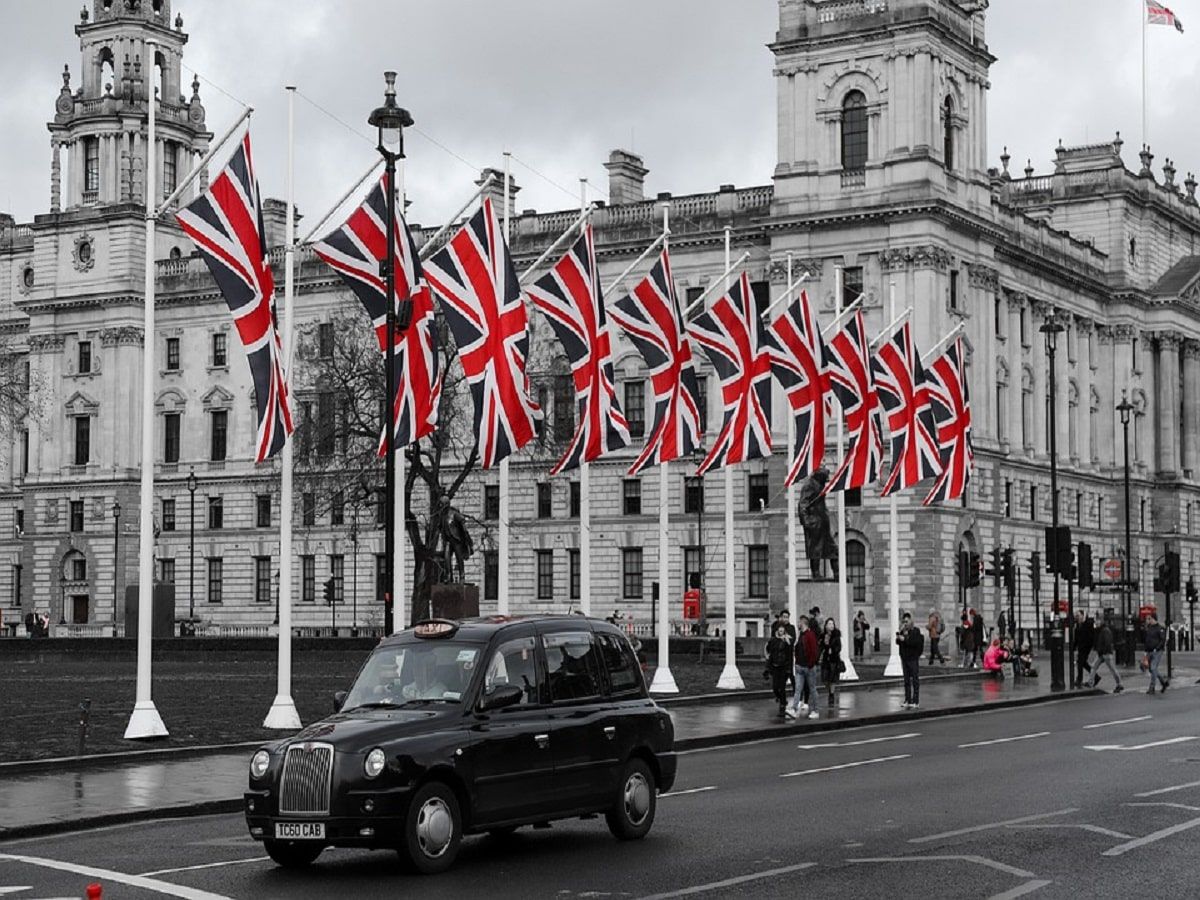
The UK is a bit of a hot mess right now. While the Queen seems to float above the fray and Britons seem to be happily celebrating her 70 years on the throne in delightfully nostalgic ways, blowback from Covid and Brexit is the name of the game right now across the UK.

This is certainly true for the current resident of 10 Downing Street right now. Boris Johnson is facing a vote of no confidence from the rest of the Tory party. This is predominantly because of the scandal caused by a lack of compliance with the government’s own Covid rules. However, beyond this, the UK is now suffering from not only post-Covid supply chain problems and inflation but the lingering effects of Brexit.

If Johnson does win, he will not face another such challenge for a year. What happens to pending policies – like cannabis reform for the UK?

Cannabis Reform is not Party Driven

No matter the outcome of Johnson’s fate which will be decided on Monday evening (British time), it is unlikely to impact cannabis reform, one way or another, at least directly. There are several reasons. This starts, tragically with the fact that the Labor Party can be just as anti-cannabis as their colleagues across the aisle.

Indeed, it is very clear that the unsettled political environment of the UK right now is one of the largest detriments to having a debate on legalization. The only politician who has been consistently and vocally at least pro decriminalization is the mayor of London, Sadiq Khan. It is in his campaign for the same that one can hear the same kinds of reasons for legalization as in the United States. Namely, that stop and search activities by the police are predominantly targeted at minority youth.

Could German Legalization Influence the Brits?

It is very possible that German legalization later this year, along with several other EU countries (plus Switzerland) implementing some form of recreational reform will galvanize the debate here again. However, don’t expect miracles, much less fast ones. The UK does not even have a functioning medical cannabis access program backed by the NHS.

So, while the islands surrounding the UK are certainly hotbeds of reform, don’t look for any real change of policy on the mainland in the near future.

It is also crystal if not tragically clear that onshoring the debate is going to take more than the fall of a prime minister – and for reasons that everything to do with justice of all kinds – from economic to the political variety.

Both seem to be in noticeably short supply.

boris johnson, Britain

cannabis plant

Japan’s Ministry Of Health Considers Legalization Of Medical Cannabis

The country is considering medical reform and will create a new legal framework to recriminalize adult use

The Ministry of Health in Japan has decided to embark on a path that would seem to indicate that at least medical use of some kinds of cannabis is on track to be authorized soon.

The bad news? The government also apparently intends to become alone in the world to make medical use legal while also planning to specifically penalize recreational users.

As of last week, the Ministry began formal discussions on how to revise the country’s Narcotics Control Act, enacted just after WWII, in 1948. Last year, internal discussions began to lead ministers in the government in the direction of reform after a report discussed the medical efficacy of the drug on diseases like epilepsy. The Ministry of Health intends to draw up proposals before the end of this summer.

All G-7 countries, with the exception of Japan, have approved the use of CBD-based drugs to treat epilepsy.

Going Sideways?

That said, it is not clear how fast the country will move on cannabis reform more generally. The governmental inquiry is also discussing a new provision to the Control Act that specifically criminalizes recreational use while providing a medical exception to patients. There are also expected to be harsh penalties for the consumption of recreational cannabis.

This is a country with a long and tortured cannabis history. In 1980, former Beatles member, Paul McCartney visited the country with about 8 ounces in his possession. He was subsequently banned from the country for 11 years.

The government also made international headlines in 2018, clearly targeting Japanese nationals living in North America when it forbade its ex-pat citizens to use cannabis even if living in a country where its use was legal.

More recently, this February, a U.S. Marine received two years of hard labour for importing a half-gallon of cannabis-infused liquid and a quarter pound of cannabis flower. On May 17, a Japanese school nurse was also imprisoned for suspected possession of an unspecified amount of dried cannabis flower.

As of last year, there were 5,400 people charged with illegal possession – a new record for the country. Offenders below thirty accounted for 70% of those arrested. The number of people arrested for possession has doubled since 2017.

While it is unlikely that this strange compromise will hold, Japan, as a result, has certainly entered the global cannabis conversation with a unique “reform” proposal – even if it is, obviously, an unsustainable one long term.

japan

International Cannabis Business Conference

NEWS FROM AROUND THE GLOBE

BROUGHT TO YOU BY THE ICBC

© International Cannabis Chronicle. All rights reserved. Site developed and hosted by Rogue Web Works.