NEWS FROM AROUND THE GLOBE BROUGHT TO YOU BY THE ICBC

Author: Frank Schuler

Frank Schuler is originally from Switzerland and reports on cannabis industry and policy news from around the world.
opioids painkillers pills

Study Finds 50% Opioid Reduction By German Medical Cannabis Patients

Opioids are a blessing and a curse to the human population. In some instances, opioids can be helpful to patients that are suffering from various types of pain, such as the pain that follows a surgical procedure.

However, opioids are also very addictive and exponentially more harmful to the human body compared to cannabis. It is estimated that roughly 7 out of every 10 deaths caused by an overdose worldwide are the result of opioids.

As I have pointed out in previous articles, no one should be shamed by other people for using opioids. As previously mentioned in this particular article, there are times when it is helpful for certain patients in certain circumstances to incorporate opioids into their pain management strategies.

With that being said, cannabis is another tool that chronic pain patients should consider. The cannabis plant is far safer than opioids, and for many patients, it’s a more effective form of treatment as proven by the results of a recent study in Germany. Below is more information about the study via a news release from NORML:

Potsdam, Germany: Chronic pain patients provided with cannabis-based interventions significantly reduce their daily intake of prescription opioids, according to longitudinal data published in the German medical journal Schmerz.

A team of German investigators assessed opioid use trends in a cohort of 178 chronic pain patients who were provided with either whole-plant cannabis extracts, nabiximols (a cannabis plant-derived oromucosal spray), or dronabinol (synthetic THC capsules) for an average period of 366 days. The majority of participants in the trial (65 percent) were older than 65 years of age.

Consistent with dozens of prior studies, patients significantly reduced their daily opioid intake over the course of the trial.

Investigators failed to identify any significant side effects due to the cannabis-based interventions.

Authors reported: “Patients daily opioid dosages were “significantly reduced in course of time by … 50 percent. This reduction was independent on CAM [medical cannabinoids] dosage, age and gender.”

They concluded: “Patients with chronic pain profit from long-term CAM which safely and significantly lower the consumption of co-medicated opioids, even at low dosages. … Older patients benefit from CAM, and adverse effects do not limit the (chronic) use and prescription of CAM in the elderly.”

Those who consume cannabis medicinally are most likely to report doing so to address chronic pain symptoms. Studies further report that pain patients typically reduce or eliminate their use of opioids following their initiation of cannabis therapy.

Full text of the study, “Cannabinoids reduce opioid use in older patients with pain: A retrospective three-year analysis of data from a general practice,” appears in Schmerz. Additional information is available from NORML’s fact sheet, ‘Relationship Between Marijuana and Opioids.’


Germany, opioids

hemp plant field

Hempcrete Gets A Boost From The International Code Council

The hemp plant can be made into more things than just about any other plant on earth. The number of things that hemp can be made into is well into the thousands, with some estimates being as great as 50,000 things that hemp can be made into.

While virtually every item that hemp can be made into benefits humankind, one product is particularly useful – hempcrete. Hempcrete, sometimes referred to as hemp-lime, is a bio-composite made of the woody inner core of the hemp plant mixed with a lime base that serves as a binder.

The hemp plant’s core (called the ‘shiv’) has a large silica content, which is why it bonds well with lime. Hempcrete can be used as a building material for various types of structures, primarily as an insulation material that pairs well with wood framing.

Hempcrete is exponentially lighter than concrete, is more fire-resistant than most other comparable building materials, and is carbon negative, meaning that it takes more carbon out of the air than it puts into it.

Earlier this week hempcrete received a recommendation from the International Code Council to add hempcrete to its International Residential Code. The recommendation moves hempcrete a step closer to formal adoption as an officially recognized residential building material.

“The International Code Council is the leading global source of model codes and standards and building safety solutions that include product evaluation, accreditation, technology, training, and certification.” according to its website.

“The Code Council’s codes, standards, and solutions are used to ensure safe, affordable, and sustainable communities and buildings worldwide.” the Council’s website goes on to say.

While the International Code Council is based in the United States, aspects of its official International Residential Code have been adopted around the world, and officially adding hempcrete to it will result in hempcrete being used more often than it is now, and that is obviously good news.

Hemp production has risen considerably around the world in recent years, mostly due to the rise in the popularity of CBD products. However, as hempcrete continues to be used more often by builders around the globe, hempcrete will likely prove to be a driving force for increased hemp production itself.

hempcrete

greece

Greek Minister Says Medical Cannabis Will Be Available To Foreigners

Greece originally legalized cannabis for medical use in 2017, although, it’s been a very slow start to getting safe access to medical cannabis in place for patients. Roughly five years after the original measure’s passage, it has turned out to be almost entirely symbolic.

As is the case in every country on earth, Greece is home to patients that are suffering from various conditions and some, if not all, of those conditions can be treated with medical cannabis products to some degree.

Medical cannabis reform has taken hold across the European continent, and as of late last year, at least one of Greece’s neighbors along the Mediterranean Sea, Malta, is now home to adult-use cannabis legalization.

Greece’s Minister for Development and Investment Adonis Georgiadis recently spoke to Greek Reporter and provided assurances that safe access is on the way for the suffering patients of Greece this year, as well as for foreigners. Below are excerpts from Greek Reporter:

Speaking exclusively to Greek Reporter, Georgiadis maintained that medical cannabis would be produced and sold in Greece beginning in 2022.

“The goal is for Greece to become the top European country in the production of medical cannabis. Greece’s environment is friendly for this particular plant and we think we will have a natural advantage,” Georgiadis told Greek Reporter.

The Greek minister revealed to Greek Reporter that foreigners will also be able to use medical cannabis in Greece and that they would be allowed to purchase it through pharmacies with “the only condition [being] that they have a prescription from their doctor.”

The revelation that foreigners will be able to purchase medical cannabis from pharmacies in Greece is fantastic, however, it will be interesting to see what the actual rules and regulations are regarding the concept described by the minister.

Obviously, prescriptions differ in format and type from country to country, and in some jurisdictions, medical cannabis is not prescribed. Instead, patients are registered with a governing body and can make purchases from regulated outlets that are not always pharmaceutical in nature.

As with many things cannabis policy-related in Europe, we will have to wait and see how it all plays out. In the meantime, we will be sure to report any significant developments in Greece and beyond.

greece

calgary alberta canada flag

Canada To Establish Cannabis Industry Panel To Boost National Industry

Currently, Canada is the international leader in the global cannabis industry. The North American country was not the first to legalize cannabis, however, it was the first G-7 nation to do so and the first country on earth to allow legal adult-use cannabis sales to anyone of legal age.

Cannabis companies based in Canada now have a footprint all over the world where the legal cannabis industry is allowed to exist, either with operations in other countries or via export/import agreements with other countries.

As we previously reported, Canada’s legal cannabis industry has served as a major economic driver for the country. The legal cannabis industry in Canada has created roughly 151,000 jobs. In addition to generating new jobs across Canada, the emerging legal cannabis industry is responsible for generating over $15 billion since legal adult-use sales launched in late 2018.

The legal cannabis industry in Canada has contributed over $43.5 billion to the nation’s GDP since the start of legalization. All of this has occurred without Canada having a governmental entity dedicated to helping boost the nation’s emerging cannabis industry. That is reportedly set to finally change. Per BNN Bloomberg:

More than three years after Canada legalized cannabis, the government plans to form a strategic panel led by the Department of Innovation, Science and Economic Development aimed at engaging with industry participants and other stakeholders to help grow the country’s domestic legal marijuana industry.

The measures will likely be welcomed by industry executives and advocates who have complained about a lack of interest from Ottawa in fixing regulations that have weighed on Canada’s licensed cannabis producers, many of whom have struggled to make a profit.

If Canada’s emerging cannabis industry has experienced as much success as it has to date with virtually no help from Canada’s government, it will be interesting to see where things go now that the government is apparently set to embrace the industry.

The government strategic panel being led by the Department of Innovation, Science and Economic Development is fitting given the dynamic nature of the cannabis industry. It’s one of the very few industries where innovation, science, and economics truly intertwine and where such tremendous potential exists.

Canada

republic of albania flag

Albanian Prime Minister: We Will Legalize Medical Cannabis Cultivation

It is no secret that a lot of cannabis is smuggled through Albania prior to making its way across the European continent. No one knows how much cannabis is smuggled via the popular route, however, it’s likely a safe assumption that it’s a lot.

Like many countries around the globe that are synonymous with the unregulated cannabis trade, Albania is in the process of exploring how to reform its cannabis laws. As we previously reported, Albania’s Prime Minister Edi Rama reopened the topic of medical cannabis legalization earlier this year.

Albania appears to be moving closer to legalizing medical cannabis cultivation according to local media reports this month. Per Euronews Albania:

Albania will legalize the cultivation of marijuana for medical purposes, declared PM Edi Rama on Thursday after revealing the results of the National Consultation survey.

61% or over 309,000 out of some 500,00 respondents said ‘yes’ to legalizing medical marijuana, and 29% said ‘no’.

That would see the decriminalization of cultivating, processing, and state-controlled export of cannabis.

The survey mentioned in the excerpt was performed using online and traditional paper gathering methodology and was conducted between mid-January and the end of March.

It is still unclear what framework a potential Albanian medical cannabis program would be built upon. Albania’s Prime Minister previously indicated that medical cannabis cultivation would mainly be geared toward exports, which would be unfortunate if so.

Albania would definitely benefit economically from ramping up medical cannabis exports, however, suffering patients in Albania also need safe access to legal medical cannabis. Only time will tell whether that happens or not.

albania

cannabis plant

Scientists Boost THCA Yield Using New Grafting Method

The cannabis plant is one of the most dynamic plants on earth, and as such, it’s also a very fun plant to cultivate. Whereas some plant varieties take a long time to grow from start to finish, the cannabis plant matures very quickly when cultivated properly.

As with most crops, there are different subvarieties of the cannabis plant, often informally referred to as ‘strains.’ Different strains have different properties, with some of those properties being more or less desirable than others.

The concept of differing desirability levels of properties and attributes among crop varieties is far from unique to cannabis, and cultivators of all types of crops have used a method known as ‘grafting’ over the years to combine the best attributes of multiple varieties of one or more crops.

Australian Study

Scientists in Australia recently grafted multiple cannabis varieties using what they described as a ‘new’ way to graft cannabis plants.

“We developed a grafting methodology specifically for medicinal Cannabis, involving a single step, in which a freshly cut scion is grafted to a freshly cut donor stem that will become the rootstock. This study also aimed to uncover a potential role for roots in influencing cannabinoid content.” the researchers stated.

“Two varieties with desirable attributes but cultivation limitations were selected to act as scions. The first, “CBD1” was a high CBDA accumulating variety with low biomass yield, and the second, “THC2”, was a high yielding, high THCA accumulating line with inconsistent root development during cloning. Two candidate rootstocks, “THC9r” and “THC8r”, were identified; both were high THCA, low CBDA varieties.” the researchers went on to say.

“Two varieties with desirable attributes but cultivation limitations were selected to act as scions. The first, “CBD1” was a high CBDA accumulating variety with low biomass yield, and the second, “THC2”, was a high yielding, high THCA accumulating line with inconsistent root development during cloning. Two candidate rootstocks, “THC9r” and “THC8r”, were identified; both were high THCA, low CBDA varieties. Our results present a new grafting method for medicinal Cannabis that improved yield in THC2 and required no additional cultivation time.” the researchers concluded.

What Is THCA?

For those that are new to cannabis or are not very familiar with the cannabis plant’s chemistry, the cannabis plant is comprised of dozens of cannabinoids. Two of the most popular and well-known cannabinoids are tetrahydrocannabinol (THC) and cannabidiol (CBD).

THCA is far less known, although that is changing as time goes by. THCA stands for tetrahydrocannabinolic acid and it is the precursor to THC. As with most, if not all, cannabinoids THCA possesses wellness properties.

The cannabinoid, which is the most abundant non-psychoactive cannabinoid in the cannabis plant, has been found to possess anti-inflammatory and neuroprotective properties as well as the potential to reduce nausea and vomiting.

As more becomes known about THCA, global demand will increase, and that increase in demand will no doubt be met by savvy entrepreneurs that bring THCA to the marketplace in whatever manner is permitted.

With that in mind, being able to boost THCA yield is a good thing, especially when considering that the scientists in Australia indicated that no additional growth time was necessary to achieve the higher THCA yield when incorporating their grafting method.

australia

south korea flag

Recent Constitutional Court Decision Highlights South Korea’s Terrible Cannabis Laws

South Korea is not exactly a great place when it comes to cannabis policy. In fact, it’s pretty terrible. South Korea passed a medical cannabis law in 2018, however, it still prohibits adult-use cannabis.

Even though the country has a medical cannabis program now, it’s a very limited one. Furthermore, the penalties for anyone caught with cannabis outside of the parameters of the program remained nothing short of horrific.

The harms of cannabis laws in South Korea were on full display this month when South Korea’s top court ruled that bringing cannabis into the country, regardless of the reason and/or if it was obtained legally, is illegal unless it’s approved by the government prior to it being brought into South Korea. Per Yonhap News Agency:

The Constitutional Court has ruled that it is constitutional to punish those who bring marijuana into the country, regardless of how they end up possessing the substance, officials said Wednesday.

In a unanimous decision, the court dismissed a constitutional petition filed against the Narcotics Control Act that stipulates heavy punishment for those possessing and bringing in marijuana even if they did not purchase it.

Under the law, violators can be sentenced to life imprisonment or at least five years in prison unless they have received approval from the Ministry of Food and Drug Safety to bring in the drug for medical, academic or public purposes.

Under no circumstances should a cannabis-only offense result in a lifetime prison sentence, such as is possible in South Korea. It should also never result in a five-year mandatory sentence either, or any jail sentence at all for that matter.

I get that ‘the rules are the rules,’ however, that doesn’t make it right, at all. The person in this latest case in South Korea had in her possession 5 cannabis vape pen cartridges that she brought from Vietnam to South Korea. She now may spend the rest of her life in prison. That is inhumane in every measurable way.

south korea

Research science labratory lab

Malaysia’s Health Minister Is In Need Of Cannabis Research Partners

Despite what cannabis opponents and some skeptics may claim, the cannabis plant has been the subject of considerable scientific study. To be fair, the cannabis plant was not studied as much as it should have been in some parts of the world due to prohibition, such as in the United States. However, there’s still a considerable number of global studies already on the books.

PubMed.gov houses an enormous amount of peer-reviewed research on all types of topics, including cannabis. For example, a search for the word ‘cannabis’ in the database yields 28,160 results for peer-reviewed studies, as seen in the image below:

Pubmed cannabis

A search for the term ‘marijuana’ returns even more results – 39,928 as of this article’s posting. A search for ‘CBD’ returns 9,505 results. More research regarding cannabis and cannabinoids is always welcomed, however, it’s always worth noting that there is already a tremendous amount of research in existence, especially in recent years.

With all of that in mind, it’s always perplexing to me when lawmakers and other government officials in some countries continue to use the ‘we need more research’ as a footdragging excuse to refrain from pursuing meaningful medical cannabis reform.

A recent example of that seems to be potentially on display in Malaysia where the nation’s Minister of Health is pointing to the lack of research being conducted specifically in his country and the need for research partnerships. Below is more about it via excerpts from an article posted by The Rakyat Post:

The Health Ministry is ready to collaborate with any parties to study the usage of marijuana and cannabis in medicine. Its minister Khairy Jamalauddin Abu Bakar said that while there is a lot of advocacy of late on the medicinal use of marijuana, the fact remains that there have been no full submissions for a clinical study or trial on the subject.

“@KKMPutrajaya (MOH) welcomes industry or academia initiated research for the medicinal use of CBD (cannabidiol). We are ready to collaborate,” tweets Khairy.

The Rembau MP also added that MOH has been consistent in practicing evidence-based policies. “That’s why we have welcomed clinical studies for the use of CBD for medicinal purposes.”

To be clear, when the minister indicates that ‘there have been no full submissions for a clinical study or trial on the subject, he is obviously referring only to studies and trials in his home country, as there is plenty of readily-available research from other countries.

Quality cannabis researchers need to take the minister up on his offer. In a perfect world, Malaysia would get on the right side of history immediately and recognize the body of scientific research and personal patient experiences that already exists.

However, if the minister wants more research and the government of Malaysia is actually willing to work in good faith to help in meaningful ways to facilitate cannabis research, then by all means scientists and companies should pounce on the opportunity.

malaysia

cannabis flower bud nug

UK Approves First ‘Pure Cannabis’ Trial For Chronic Pain

When it comes to medical cannabis programs around the globe, the United Kingdom ranks near the bottom of any list. A medical program is only as good as the number of suffering patients that it helps provide safe access to, and as of last summer, the number of patients helped in the United Kingdom was dismal.

Per a report by Vice from last summer, “there have been just three NHS prescriptions of cannabis oil. A private market is growing – with roughly 6,000 prescriptions issued – but many struggle to pay the expensive fees each month.”

The fact of the matter is that the United Kingdom’s medical program is extremely restrictive and essentially set up to give a virtual monopoly to pharmaceutical cannabis. The current setup is not good for patients being that so few want to use pharmaceutical cannabis products, and it’s also not good for the makers of pharmaceutical cannabis products because their market base is extremely small. No one is ‘winning’ in the current medical cannabis model in the UK.

Lawmakers and regulators in the UK have made it clear that they want to conduct more research before expanding the medical cannabis program, and fortunately more research appears to be on the way, and involving raw cannabis no less. Per The Times:

Thousands of Britons will be given cannabis for pain relief under a proposed clinical trial that could pave the way for millions to get the drug on the NHS.

Medical regulators have approved the UK’s first trial of pure cannabis for people with chronic pain caused by conditions including arthritis, The Times can reveal.

Some 5,000 adults will take vaporised cannabis daily for at least a year through inhalers that dispense cartridges containing a measured dose of “whole flower” unprocessed marijuana.

This is a small, yet significant step that will hopefully yield meaningful movement for improving the UK’s medical cannabis program. Studies that involve ‘whole flower’ are often more insightful compared to studies that only use pharmaceutical cannabis products being that most patients consume raw flower as part of their medical cannabis regimens.

The study is expected to launch ‘later this year’ and as pointed out by The Times, the study itself will go for at least one year. That means that at the earliest some, but perhaps not all, of the study’s results will be released in late 2023. You then have to assume that lawmakers and regulators will ponder the results for some amount of time before taking action, and it’s anyone’s guess how long that process will take.

At some point, after the study is finished and after the results are released and after the National Institute for Health and Care Excellence offers up its recommendation, the results of this study could lead to as many as 15 million patients in the United Kingdom finally being able to vaporize cannabis flower. It’s going to be a long process, however, it’s better than nothing I suppose.

United Kingdom

cannabis joint lounge social use space consumption

B.C. Is Seeking Public Input For Cannabis Consumption Spaces

Legalizing and regulating cannabis social use venues is the next frontier for cannabis reform and industry efforts. Social use venues are essentially anything that involves on-site cannabis consumption, with popular forms involving concerts and clubs, as well as general businesses that simply want to allow people to consume cannabis on their property.

Social use venues already exist in various places around the globe. In some places, they are outright legal with clear regulations, and in other parts of the world the venues operate in a legal gray area. The rise of regulated social use reform around the world will further build on what is likely to become an enormously popular and profitable cannabis tourism sector.

One place where cannabis social use venues exist, albeit not in a regulated fashion, is in British Columbia, Canada. British Columbia has long been home to a vibrant cannabis community and served as a global cannabis leader well before cannabis was actually legal in Canada. Social use venues are very popular in B.C., especially with tourists.

Regulators in Canada are asking for public input to help them craft official regulations for cannabis consumption spaces. Below is more information about it via a government news release. If you reside in British Colombia make sure to provide your valuable input:

Backgrounders

Cannabis in B.C.
  • Non-medical cannabis was legalized in B.C. in October 2018.
  • Cannabis can be legally purchased from licensed private non-medical cannabis stores, publicly run BC Cannabis Stores or stores authorized to sell cannabis through a government-to-government agreement with an Indigenous Nation.
  • There were 426 licensed cannabis retail stores in B.C. at the end of 2021.
  • In 2021, B.C.’s cannabis stores saw $554 million in sales, up from $370 million the previous year.
  • Almost one-third of British Columbians 19 and older report having used cannabis in the past year.
  • The Province is continually monitoring the impact of cannabis legalization on the health and safety of British Columbians.
  • The results of the 2021 B.C. Cannabis Use Survey, which surveyed almost 25,000 British Columbians, will be published this spring.

british columbia, Canada

cannabis seedling plant outdoor garden

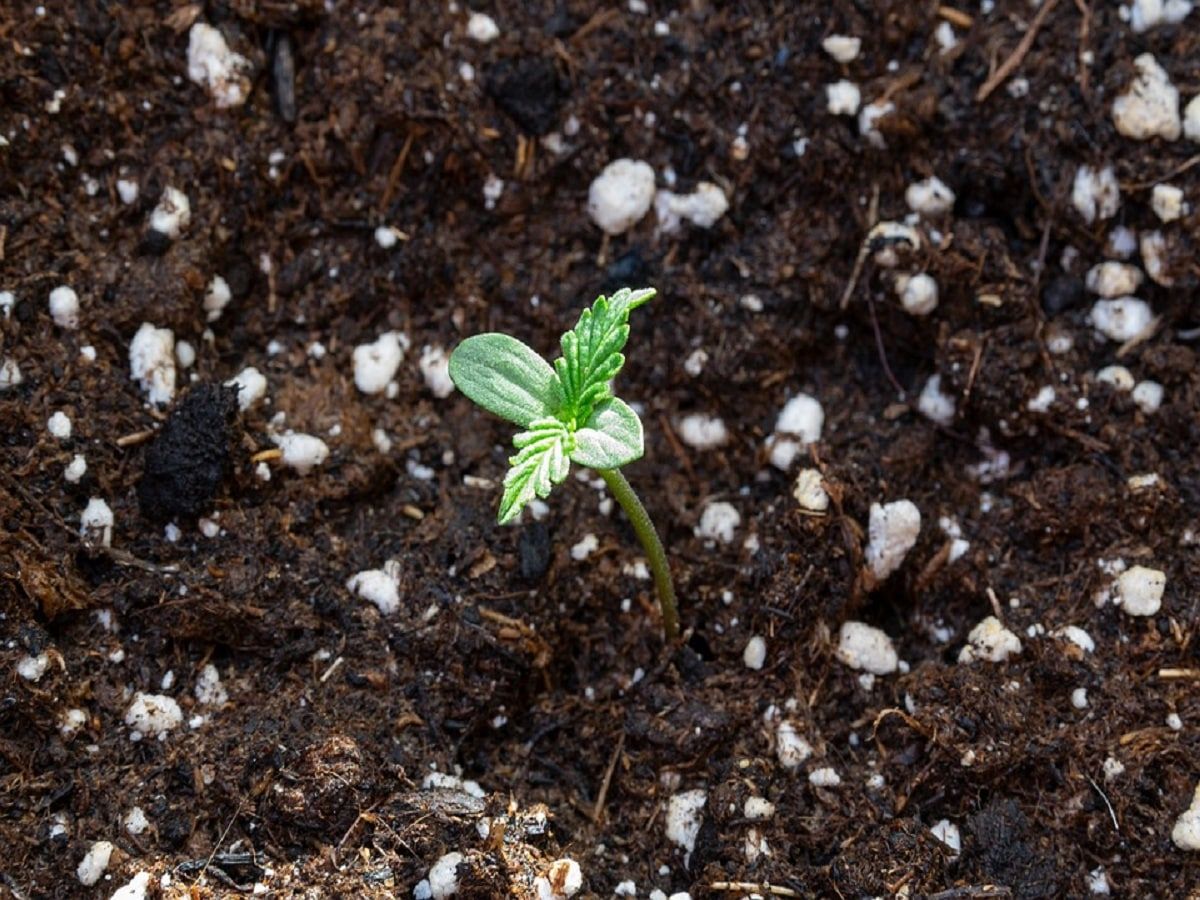
Cannabis Activists Plant Cannabis On New Zealand Parliament Grounds

Effective cannabis activism can take on different forms depending on the time and setting. Despite what some activists may claim, there really is no ‘perfect’ way to do cannabis activism. Proper cannabis activism incorporates a diversity of tactics, with some tactics perhaps being more unorthodox than others.

One form of activism that has occurred in multiple places around the world over the years involves advocates planting cannabis seeds or clones on high-profile government properties. The latest example of the tactic recently occurred in New Zealand where plants suspected to be cannabis were discovered on the grounds of the nation’s Parliament. Per NewsHub:

Images posted to Twitter on Thursday show small, green, leafy plants growing out of the bark in a garden on the forecourt.

The suspicious plants caught the attention of Speaker Trevor Mallard, whose only response to the situation was “we are weeding out the weed”.

It hasn’t been confirmed if the plants are indeed cannabis but Dakta Green, founder of New Zealand’s first cannabis club The Daktory, said it’s possible.

“From the photo, it appears green fairies have been sprinkling peace and love. Closer inspection required for [a] definitive answer,” Green tweeted in response to the photos.

It’s worth pointing out, as the article excerpt touches on, that the plants were not 100% confirmed to be cannabis via a lab test prior to being removed and destroyed by government officials. However, they clearly appear to be cannabis plants and if they were not, it’s likely that they would have been left in the ground, at least for a little longer.

Planting cannabis seeds may seem to be a silly tactic to some people in the international cannabis community. Yet, if you consider how much media attention the stunt received, and that the media coverage highlighted the fact that New Zealand continues to prohibit cannabis, then perhaps it’s not that silly of a tactic after all.

New Zealand voters narrowly defeated a cannabis legalization referendum measure in 2020. Unfortunately, it is unclear when voters will get another chance to weigh in on the issue.

new zealand

lucha libre wrestling wrestler

WWE Continues To Prohibit Cannabis Use

Professional wrestling is one of the most popular forms of entertainment around the world. For instance, professional wrestling in Mexico, called ‘Lucha Libre’, is the second most popular form of entertainment in the country only behind futbol.

The WWE is the most popular wrestling company on planet earth, with its broadcasts reaching more than 180 countries and being conducted in 30 different languages. WWE estimates that as many as 1 billion households can watch their programming every week.

Unfortunately, WWE prohibits its entertainers from consuming cannabis. It was rumored that the multi-billion dollar entertainment company was changing its cannabis policy, however, that was a false rumor as reported by Ring Side News:

Recently, a rumor suggested that WWE had somehow removed marijuana from their Prohibited Substances list. Naturally, this led to many fans immediately thinking of Matt Riddle and RVD, both of whom love marijuana. It spread like wildfire after an apparent forged article from WWE’s corporate website was shared that appeared to announce that WWE removed marijuana from their wellness policy.

Interestingly enough, as revealed by WWE’s corporate website, marijuana has not been removed from the Prohibited Substances list.

Per WWE policy, “In the event of any positive test for marijuana, the WWE Talent shall be fined Two Thousand Five Hundred US Dollars ($2,500.00) per positive test, which shall be deducted from the WWE Talent’s downside guarantee.”

No one is saying that WWE entertainers should be allowed to be intoxicated while on the job, and that is true of pretty much every industry aside from perhaps some positions in the cannabis industry.

But why can’t WWE wrestlers consume cannabis in their off-hours? Cannabis can stay in a person’s system for weeks, and in some cases, months, so a policy prohibiting cannabis from being in a person’s system does not address intoxication on the job in a narrowly tailored way.

The WWE policy doesn’t make any sense. You would think that the WWE would embrace cannabis to help wrestlers deal with their countless aches and pains in a safe and effective fashion. But then again, nothing about prohibition makes sense aside from it being a policy tool to selectively penalize and control people.

wwe

International Cannabis Business Conference

NEWS FROM AROUND THE GLOBE

BROUGHT TO YOU BY THE ICBC

© International Cannabis Chronicle. All rights reserved. Site developed and hosted by Rogue Web Works.