
NEWS FROM AROUND THE GLOBE BROUGHT TO YOU BY THE ICBC

Author: Johnny Green

Johnny Green is a cannabis activist and prolific author from Oregon. Green was the High Times Freedom Fighter of the Month in May 2017 and appeared in the Netflix cannabis documentary 'Grass is Greener.'
stock market stocks

61% In U.S. Would Invest In European Cannabis Stocks According To Survey

The European continent is the most exciting place for cannabis policy and industry right now, which is something that I have pointed out in several articles. The international cannabis community’s eyes were already set on Europe leading up to Malta’s move to legalize at the end of last year, and legalization in Malta will no doubt add to the momentum for similar reform in other European countries.

Several countries in Europe are expected to legalize cannabis for adult use in the coming years, and in many of those countries adult-use cannabis sales will be a part of the equation. Low-THC product sales are already legal nationwide in Switzerland, and countries such as Denmark and the Netherlands are using pilot programs in which cannabis commerce will be legal at a local level.

Germany is the biggest cannabis prohibition domino that appears to be close to falling, and when that happens, it’s going to result in a tectonic shift in the global cannabis industry and policy landscape. According to the results of a new survey that was released this week by Bloomwell Group, many in the United States are eagerly awaiting the spread of legalization in Europe, particularly in Germany. Below is more information about the survey results via a company press release:

FRANKFURT, GermanyApril 11, 2022 /PRNewswire/ — The “green rush” in Europe has commenced, and Americans are ready to invest their time, travel plans and money into the cannabis market across the pond, according to a new study.

Today, Bloomwell Group, a Germany-based holding company for medical cannabis companies, released the results of its ‘European Cannabis Market Survey,’ which examined American cannabis consumers’ expectations for, and opinions of, this burgeoning sector abroad, including the demand for cannabis tourism, investment opportunities, trade and more.

SURVEY HIGHLIGHTS
The vast majority of respondents – 80 percent – agreed that “cannabis companies are attractive investment options,” while 61 percent shared that they “would invest in European cannabis stocks.”

Respondents also reported positive sentiments regarding cannabis tourism, an evolving issue in Germany, which only recently legalized adult-use cannabis after several years of expanding its medical market. Experts predict adult-use cannabis to come online by 2024, but regulators have not yet determined tourism policies. However, more than 66 percent of the Americans surveyed said they “would visit a cannabis dispensary or social consumption lounge” in Germany.

THE STATE OF EUROPEAN CANNABIS
The European cannabis industry has made unprecedented strides in the past year: Luxembourg decriminalized cannabis ownership and is hoping to legalize the market; Malta has decriminalized possession; the Netherlands launched Europe’s first-ever commercial cannabis cultivation pilot program; and Switzerland is also running a pilot project.

But the crown jewel of European cannabis is Germany, which is celebrating its medical market’s 5-year anniversary while paving the way to becoming the adult-use capital of Europe. According to a BDSA report from this month, international sales will exceed ~$10 billion in 2026. The bulk of that new legal spending will be driven by Germany (contributing ~$3 billion by 2026).

Germany has 82 million inhabitants – that’s more than Canada and California, two of the current biggest cannabis markets on the globe. Therefore, when Germany opens up for adult-use cannabis, it will become the biggest market in the world,” said Bloomwell Group CEO and Co-founder Niklas Kouparanis. “The future language for cannabis will be German.”

THE AMERICAN CONNECTION
The survey also addressed how the U.S. can potentially benefit economically from licensed cannabis markets in Europe. According to renowned economist Justus HaucapGermany will have a demand of 400 tons of cannabis annually after legalization. To help meet that dramatic demand, 80 percent of Americans polled say that the “U.S. should export cannabis to Europe,” a practice that would potentially increase domestic revenue.

Additional key survey findings include:

  • Awareness: More than half of respondents (52 percent) said they are “aware that Germany will most likely become the largest legal cannabis market within the next three years.”
  • Travel: 65 percent of Americans surveyed said they “would travel to a city or country to experience its licensed cannabis market,” while 44 percent said that they would travel to Germany specifically for cannabis tourism. As a bonus, nearly 75 percent polled said Pretzels, a Deutschland specialty, are a “satisfying ‘munchies’ food.”
  • Global Legalization: An overwhelming majority – 87 percent – said that cannabis should be legalized worldwide.

The promising survey results coincide with recent Bloomwell Group milestones that also illustrate global  confidence in the European and German cannabis markets: the company closed a seed funding round of over $10 million USD; Curaleaf’s Boris Jordan is a lead investor and board member.

METHODOLOGY
This survey was conducted online using Survey Monkey among a national sample of 845 people spanning across U.S. geographic regions and income levels. All of the respondents identified as cannabis consumers. The survey sample was weighted to reflect the gender distribution and the age distribution across the 18-60+ age brackets in the U.S.

About Bloomwell Group
Frankfurt-based Bloomwell Group acts as a holding company for medical cannabis businesses, and is also positioned to hold and oversee companies in Germany’s upcoming licensed adult-use cannabis market. It is the largest cannabis company in Germany with more than 240 employees. Bloomwell Group’s mission is to build, acquire and invest in ESG healthcare and cannabis companies along the entire value chain, excluding cultivation. In doing so, Bloomwell Group relies on patient and/or consumer-centric direct approaches to set up a strong and revolutionizing streamlined patient and consumer journey. The company is poised to transform healthcare, as well as cannabis consumption and cannabis-enhanced lifestyles for the better. The combination of natural medicines, cannabis and digitization is a journey that combines historic roots with 21st century tools. The green revolution in healthcare and a new international cannabis regulatory regime starts now and Bloomwell is leading the charge. For more information, visit: www.bloomwell.eu

Contact: Alex Rush
718.664.3517
arush@rosengrouppr.com

SOURCE The Bloomwell Group
Europe, Germany

Ngaio Bealum

ICBC MC Ngaio Bealum To Appear In New Vice Cannabis Docuseries

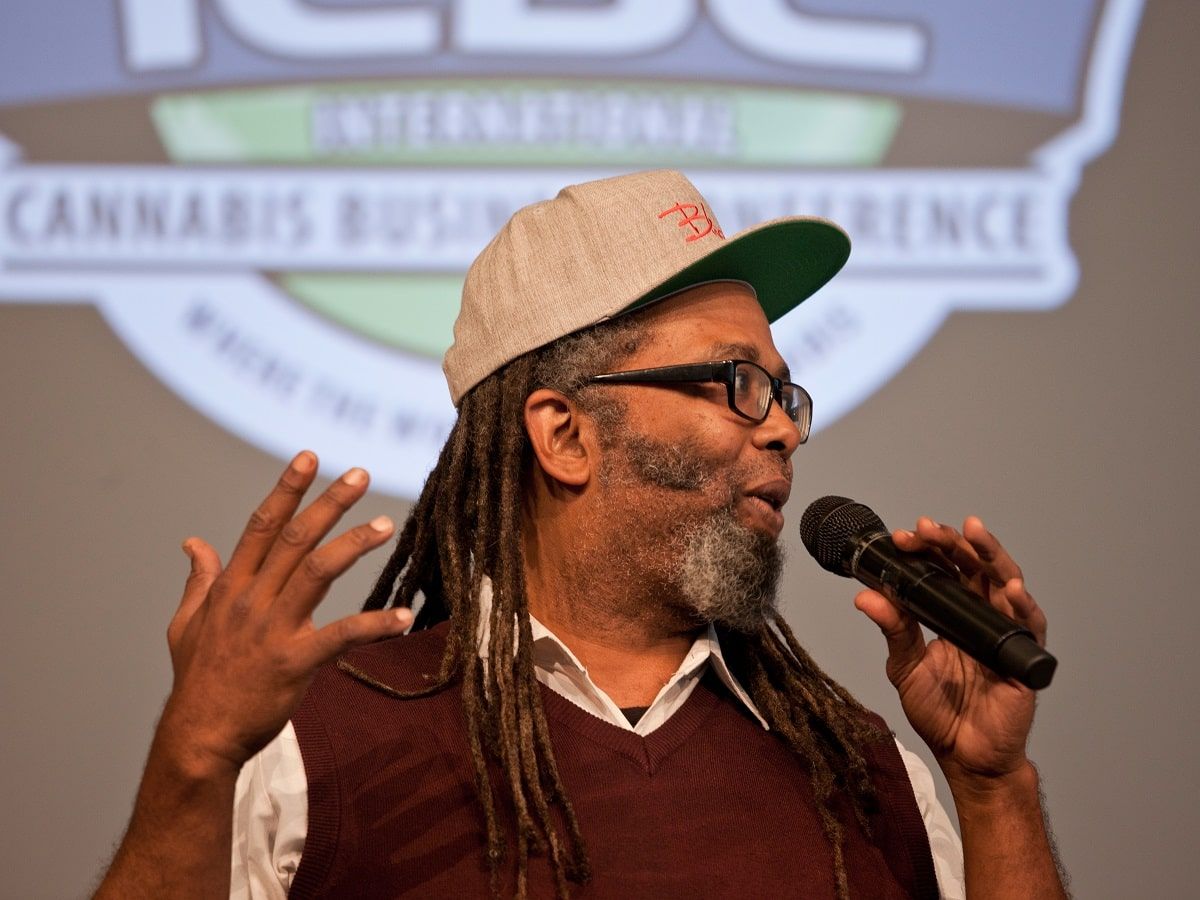
Ngaio Bealum is the most entertaining man in cannabis, and that is a title that he has held for many years. Anyone that has been to one of his comedy shows or has seen his appearances on television will be quick to attest to that fact. Bealum has performed at just about every Hempfest on the West Coast and at too many cannabis-related events to even keep track of.

He has appeared on Comedy Central, BET, MTV, and many other networks. Recently, Ngaio was a featured guest on the hilarious podcast of Doug Benson (Super High Me, Half-Baked), Getting Doug With High. In addition to his cannabis comedy, Bealum is the former editor of West Coast Cannabis Magazine and has been a tireless activist for cannabis legalization.

Ngaio has served as the Master of Ceremonies for the International Cannabis Business Conference series for many years now, and we are extremely excited to see that he will be appearing in a new docuseries that is being released on 4/20 on Vice TV. Below is more information about the new docuseries via press release:

Today, WM Technology, Inc. (“WM Technology” or the “Company”) (Nasdaq: MAPS) and Weedmaps, the leading online marketplace and premier destination for cannabis consumers, announced the forthcoming premiere of the Company’s new, original cannabis-centric docuseries, Tumbleweeds with Killer MikeHosted by rapper and activist Killer Mike, the series was produced by Wheelhouse DNA and Wheelhouse Labs and distributed through VICE Media Group. The first two episodes of the four-part series will air on VICE TV on April 20 — a day to celebrate the impact and evolution of cannabis culture in America — starting at 10 P.M ET.

Touring four cities that are central to cannabis culture — Las Vegas, San Francisco, New York, and Chicago — Killer Mike brings viewers along as he visits each city to show how the power of entertainment, cannabis, and inclusivity can build community. Throughout the series, Killer Mike will sit down with comedians such as Jocelyn Chia, Napoleon Emil, and Ngaio Bealum, along with American artist and hip hop pioneer, Fab 5 Freddy, and cannabis advocate and Veteran, Cherissa Jackson (who works with AMVETS). Together they visit cannabis dispensaries including RISE and Stiiizy, restaurants and clothing stores such as Cafe Cannal, Outta Sight Pizza, and Extra Butter to name a few, as the docuseries explores individual stories and experiences first-hand.

Tumbleweeds with Killer Mike challenges existing perceptions of cannabis, further normalizing the industry and showcasing what the plant has done and will continue to do for communities. Each episode will look at the characteristics that define a city’s identity, allowing for a better understanding of how cannabis intersects with culture.

“As the original online marketplace for cannabis consumers and businesses, we have always been committed to elevating voices that power the cannabis community, drive social equity, and further legalization,” said Juanjo Feijoo, CMO and COO of Weedmaps. “The intersection of comedy, local culture and cannabis is a natural fit as all are driven by shared values of creativity, discovery and connection.”

In addition, dropping on 4/20, Weedmaps will offer access to exclusive, bonus content through its mobile app for the duration of the series. Through this in-app experience, users will be able to learn more about the businesses in each episode, shop for products available in their area, and support AMVETS by making a donation on their site.

“Tumbleweeds has been a fun show to be a part of. Getting a chance to smoke a plant my mom and I love, hang out and laugh with hilarious comedians, all while frequenting local businesses and art installations — you’ll never hear me complain about my job!” said Killer Mike, host of Tumbleweeds with Killer Mike.

Tumbleweeds with Killer Mike will roll out beginning on 4/20, with the first two episodes featuring Las Vegas and San Francisco, respectively, followed by New York on 5/1, Chicago on 5/8 and a marathon of all four episodes on 5/15. The series will be available via VICE’s integrated platforms including VICE TV and VICE TV streaming apps.

Tumbleweeds with Killer Mike is created in partnership with Weedmaps and Wheelhouse, and produced by Wheelhouse DNA and Wheelhouse Labs. Wheelhouse DNA creates and produces content for platforms from creators across the digital landscape; Wheelhouse Labs is the full-service integrated marketing and creative lab that serves as Weedmaps’ Entertainment Marketing AOR.

ngaio bealum

Ed Rosenthal

Ed Rosenthal Implores Cannabis Industry To Help Free Cannabis Prisoners

Ed Rosenthal, often referred to as ‘the Guru of Ganja,’ is one of the most recognizable people in the entire global cannabis community. Long-serving as one of the most prolific cannabis authors on planet earth, Rosenthal was educating the masses about cannabis cultivation before many current cannabis community members were even alive.

In addition to being an author and leading international cultivation expert, Ed Rosenthal is also one of the most passionate cannabis activists on earth. He has fought tirelessly for several decades to do his part in helping reform harmful cannabis prohibition policies not only in his home state of California or his home country in the United States, but all over the world.

So it was not exactly surprising to see Ed Rosenthal use his time on the microphone as a special guest in Barcelona at the recent International Cannabis Business Conference to promote what he describes as ‘the most important subject.’ That subject is freeing cannabis prisoners around the globe. During his speech Rosenthal implored all members of the cannabis industry to do their part, stating that ‘you owe it’ to help free cannabis prisoners if you are a part of the cannabis industry, and Ed is 100% spot-on in expressing that logical and compassionate expectation.

Below is Ed Rosenthal’s special speech in Barcelona in its entirety. One organization working on freeing cannabis prisoners that you will hear Ed specifically mention is the Last Prisoner Project. We encourage people to check out the organization, in addition to watching Ed’s speech in the embedded video below (footage via MarihuanaTelevision.tv):

barcelona, ed rosenthal, last prisoner project

polling poll survey

Hanway Poll Finds Only 25% Of Europeans Are Directly Opposed To Cannabis Legalization

The walls of cannabis prohibition are continuing to crumble on the European continent as evidenced by the results of a new poll out this week from Hanway Associates. The poll, which was the first of its kind for Hanway and conducted in conjunction with Cansativa, Curaleaf International, and Ince, surveyed adults in Europe and asked them various questions about adult-use cannabis.

“The polling data published by Hanway Associates reveals that there is majority support across Europe for legal, government-regulated sales of cannabis products to adults over the age of 18 years. Overall, of the 9,043 adults surveyed, 55% supported legal recreational cannabis, 20% were indifferent and the remainder, 25%, were opposed.” stated a press release announcing the results of the poll.

Unlike many other polls that I have seen out of Europe, this poll by Hanway focused entirely on adult-use cannabis reform and sales rather than combining it with medical cannabis. Medical cannabis is absolutely important, however, it’s insightful to see such thorough polling specific to adult-use policies and regulations given the political climate in Europe right now regarding adult-use reform.

Retail Stores Are Prefered

Malta became the first European country in history to legalize cannabis for adult-use nationwide late last year. Malta is obviously not the largest country in Europe by any stretch of the imagination, however, the public policy shift absolutely increased momentum for reform in other European countries. It’s worth noting that the study at the heart of this article was conducted months after Malta’s legalization measure was passed.

Whenever you talk about adult-use cannabis reform in Europe and the industry that it will create, it’s vital to compare the different legalization models that are currently in use or being proposed. For instance, Malta is going to incorporate the ‘club model’ as it is often referred to. Spain has a similar club model already in place, albeit in an unregulated fashion. The club model involves people joining private clubs to acquire cannabis. That is different from selling cannabis via storefronts and pharmacies, which is being proposed in other European countries such as Germany.

With that in mind, one set of results from the Hanway study really stood out. “Of particular importance to Europeans was companies’ adherence to the highest standard of service and regulation in their approach to legal recreational cannabis, which is why a regulated retail offering is the least controversial option amongst supporters of legal recreational cannabis with 81% in favour vs social clubs (56% support) and home grown (62% support).” the previously cited poll press release stated.

“Of all the respondents in the poll, 48% support regulated retail stores, 35% support home grown and 32% support social clubs. Home grown has the strongest opposition with 41% against amongst all respondents. These findings indicate promising commercial opportunities for stores and highly regulated product.” the press release went on to note.

Enormous Market Potential

Another noteworthy result relates to the number of Europeans that would be open to trying cannabis if it was legal to purchase and consume. “We also find that nearly 30% of Europeans would consider trying legal cannabis – a potential consumer base of over 120m adults across core European markets.” Hanway stated.

Every nation that legalizes cannabis for adult use in Europe helps build momentum in surrounding countries. Malta was the first to legalize cannabis, however, it will not be the last. It’s also not the only jurisdiction where cannabis is currently legal in Europe. Low-THC products are already legal throughout Switzerland, in addition to a pilot program ramping up for products that are not low in THC. Multiple other countries are also ramping up similar pilot programs, and court decisions have legalized personal cannabis use/cultivation in some places to some degree, such as in Italy.

When the sky remains intact over the jurisdictions in Europe that allow legal cannabis commerce to occur, in whatever form it inevitably takes, other countries will take note and speed up their own efforts. If not, the leaders in those countries run the risk of their nations being left behind and missing out on a once-in-a-generation economic opportunity.

Europe, hanway associates, polling

skin lotion

German Researchers Examine Impact Of Cannabinoid Compounds On Skin Cancer

Skin cancer is one of the most commonly found types of cancer around the globe. The World Cancer Research Fund estimates that “Melanoma is the 19th most common cancer in men and women, with nearly 300,000 new cases worldwide in 2018. Non-melanoma skin cancer is the 5th most commonly occurring cancer in men and women, with over 1 million diagnoses worldwide in 2018.”

Fortunately, skin cancer is one of the more treatable forms of cancer, although over 5,000 people still die from the disease worldwide every year. Speaking broadly, the first sign of skin cancer is typically something on a person’s skin that looks very unordinary. Bumps, lesions, sores, and patches of skin that look like scars despite no incident causing them are all potential signs that someone has skin cancer.

Cannabis has been offered up as a treatment for skin cancer, with patients around the world incorporating cannabis topicals and other forms of medical cannabis into their treatment regimens. A team of researchers in Germany recently conducted a study exploring cannabinoids’ possible impact on skin cancer.

Rostock University Medical Centre

Researchers associated with the Institute of Pharmacology and Toxicology and the Clinic and Polyclinic for Dermatology and Venereology at Rostock University Medical Centre in Germany examined currently-available scientific research results involving cannabis and skin cancer.

“Drugs targeting the endocannabinoid system are of interest as potential systemic chemotherapeutic treatments and for palliative care in cancer. In this context, cannabinoid compounds have been successfully tested as a systemic therapeutic option in preclinical models over the past decades.” the researchers stated.

“Recent findings have suggested an essential function of the endocannabinoid system in the homeostasis of various skin functions and indicated that cannabinoids could also be considered for the treatment and prophylaxis of tumour diseases of the skin.” the researchers also stated.

“Cannabinoids have been shown to exert their anticarcinogenic effects at different levels of skin cancer progression, such as inhibition of tumour growth, proliferation, invasion and angiogenesis, as well as inducing apoptosis and autophagy.” the researchers concluded.

Keeping Research In Perspective

The results of this latest study, which is essentially an analysis of the aggregated results of many studies, are absolutely worth celebrating. The cannabis plant has helped many people, and it may help you and/or a loved one if/when a skin cancer diagnosis is rendered.

With that being said, it’s always important to note that the cannabis plant is dynamic, that human biology is complicated, and thus, results may vary. People don’t have anything to lose by trying cannabis, particularly cannabis topical rubs, however, people need to temper expectations.

Just because the cannabis plant can help cure some people’s cancer does not mean that it will always cure people’s cancer. That is true for skin cancer and every other type of cancer.

It’s a truly cruel thing to give someone that is battling cancer false hope, no matter how major or minor that false hope may be. Be realistic with yourself and your loved ones. Cannabis is a tool in a wellness toolbox and a powerful one at that, but it’s not a cure-all in every situation. Be mindful of that fact and if you do suspect that you or someone hat you know has skin cancer see a doctor right away.

Germany, skin cancer

belize flag

Belize Clergy Coalition Reportedly Preparing For Cannabis Referendum Effort

Religion and the cannabis plant have a complicated history. Many religions around the world incorporate the cannabis plant into their belief systems and have for centuries. It’s not a coincidence that many of the archeological discoveries regarding cannabis use occurred at sites where religious ceremonies were historically held.

Unfortunately, some religious organizations, particularly Evangelical Christian organizations, have served as a driving force for prohibition policies around the globe for many years. They would portray cannabis use as being ‘evil’ – even cannabis use that is for medical purposes.

I would never tell another person what religion to believe in, or for that matter, to have any religious belief at all. It’s an entirely personal decision. However, if someone claims to be a Christian then it logically follows that the person should adhere to the teachings of the deity that they profess to believe in, including and especially compassion. With that in mind, self-professed Christians should absolutely oppose cannabis prohibition given how inhumane of a public policy it is.

Members and leaders of all religions around the world should push for sensible cannabis policies, particularly Evangelical Christians given how much they have directly contributed to the harms of cannabis prohibition for so many years. Unfortunately, in Belize a coalition of Evangelical clergy is ramping up efforts to place a cannabis reform referendum measure before voters. Per Breaking Belize News:

Ѕоurсеѕ ѕау а соаlіtіоn іѕ bеіng fоrmеd tо рuѕh fоr а rеfеrеndum tо bе hеld “rеgаrdlеѕѕ оf thе раѕѕаgе оr thе ѕіgnіng іntо lаw оf thе lеgаlіzаtіоn оf mаrіјuаnа, bесаuѕе thе vоісе оf thе реорlе muѕt bе hеаrd оn thіѕ іѕѕuе.”

Ноwеvеr, wе undеrѕtаnd thаt thеrе іѕ nоthіng оffісіаl аѕ уеt оn thе tаblе frоm оnе оf thе mоѕt сrіtісаl орроnеntѕ tо thе nеw lеgіѕlаtіоn, thе Nаtіоnаl Еvаngеlісаl Аѕѕосіаtіоn оf Веlіzе (NЕАВ), ассоrdіng tо ѕоurсеѕ thеrе, аlthоugh thеу hаvе рublісlу саllеd fоr ѕuсh а rеfеrеndum.

Wе undеrѕtаnd thаt thе ѕuрроrt fоr ѕuсh а rеfеrеndum “іѕ оvеrwhеlmіng аnd bіраrtіѕаn;” mоrеоvеr, іt іѕ “hugе аnd ехраndіng [аnd] іnсludеѕ thоѕе whо ѕuрроrt lеgаlіzаtіоn whо ѕау thаt thе реорlе muѕt bе соnѕultеd.”

“Lаwуеrѕ аrе еnѕurіng thаt wе fоllоw thе асt; [thаt] whаt wе аrе dоіng іѕ ассоrdіng tо thе lаw,” ассоrdіng tо оur ѕоurсеѕ.

Only time will tell what happens in Belize, however, it’s a good sign that lawmakers appear to be moving forward with reform efforts despite not-so-surprising opposition from religious organizations.

belize

justice court conviction offense expungement legal law

Why Haven’t More People Expunged Their Cannabis Convictions In Canada?

A cannabis conviction harms a person well after they have paid their debt to society – an initial debt that they should have never had to pay in the first place. Cannabis prohibition is one of the most harmful public policies in human history and a cannabis conviction on a person’s record haunts them for the rest of their lives as long as it shows up on background checks.

Unfortunately, I have seen this play out firsthand many times over the years. My father was convicted of several cannabis-only offenses in the 1970s, 80s, and 90s. Every time my father applies for a job, housing, a loan, or anything else that requires a background check, he is subjected to tremendous cannabis stigma.

On rare occasions, the person/people conducting the background check do not care that my father is a cannabis felon, however, most of the time it disqualifies him from whatever he is applying for. One of the instances that stands out to me the most is that my father cannot serve as a coach for my little brother’s wrestling teams, and for that matter, my father is not even allowed near the team during competitions even in a parental capacity. My father lives in a legal state in the U.S., and the company that does the wrestling coach background checks is also based in a legal state. Yet, the stigma remains, all for cannabis-only offenses that occurred decades ago.

Anyone that has a cannabis offense on their record runs the risk of being treated in the same manner that my father is treated, which is why it is so important to get cannabis offenses expunged whenever possible. For many offenders, it’s very difficult to navigate the expungement process and it’s too expensive to hire a lawyer to help. Being that the offender should have never been subjected to cannabis prohibition in the first place, it’s the government’s job to clean up records automatically, and anything less than that is unacceptable.

Expungements In Canada

Canada legalized cannabis nationwide for adult use in late 2018. It was the first G-7 nation to do so, and only the second country on earth at the time to make the public policy change at a national level. In addition to refraining from charging consumers for cannabis possession, cultivation, and use, the newly passed measure in Canada, in theory, also sought to right the wrongs of the past and make it easier for people to obtain cannabis expungements.

Over three years later, the expungement process in Canada appears to be failing, with only an estimated 484 people having their records wiped clean. The low number of expungements was recently discussed by lawmakers in Canada, as seen in the embedded tweet below:

Expungements Need To Be Automatic

The situation in Canada is not an uncommon occurrence in jurisdictions where cannabis laws were reformed and expungements were not automatic. As previously touched on, the same thing is going on in the State of Oregon where I live. If there are hurdles between where a person is at with a cannabis offense on their record and getting the offense expunged, there will always be people that struggle to overcome those hurdles.

In the case of Canada, yes, the fee to get an expungement was lowered, however, there’s still a fee nonetheless. Furthermore, people still have to navigate a process. Being that over 10,000 people are eligible for an expungement and less than 500 people have successfully reached the finish line of the process, clearly, there’s something wrong.

Despite what lawmakers and government officials may claim, automatic expungements are absolutely possible. Lawmakers and government officials will often point to the false excuse that, “there is no way to identify many of the offenses in databases.” To debunk that claim all someone has to do is consider the fact that the offenses are automatically showing up on background checks. If the related case data can be automatically pulled for the purpose of subjecting someone to cannabis stigma, then clearly the same can happen to automatically remove the case data from government databases. To address the handful of cases that slip through the cracks or are missed and somehow still show up on a background check, the law needs to be clear that the offense cannot be used against the person for any reason and the company must immediately purge any related data from their records.

What I suspect is really at the heart of the issue is that governments around the world want to continue to put the burden on cannabis offenders to, at the very least, save money. If the government automatically expunges records then it has to foot the entire bill for the effort, whereas if they can keep charging the public for it then it offsets government costs, and if the fee is huge, the government involved is likely making money off of expungements. Either way, the burden of righting the wrongs of the past should lie squarely on the governments’ shoulders, and not on the shoulders of cannabis community members that have already suffered far too much.

Canada

united states congress

Temper Expectations For United States Cannabis Legalization

For the second time this decade, the United States House of Representatives passed a cannabis legalization measure. The MORE Act would, in broad terms, legalize cannabis at the federal level in the United States. Cannabis has been prohibited at the federal level in the United States since 1937, although dozens of states and Washington D.C. have legalized cannabis for adult use since 1996.

The successful vote in the United States Congress’ lower chamber came largely along party lines (220-204) with 3 Republicans breaking with their party and voting for the measure, and 2 Democrats breaking with their party and voting against the measure. The successful vote was understandably hailed by cannabis reform organizations and lawmakers.

Earl Blumenauer

“As we mark fifty years of the devastating war on drugs it is past time for Congress to catch up with the public and majority of states who have legalized some form of cannabis, and pass legislation to decriminalize the adult-use of recreational cannabis.” stated Congressman Earl Blumenauer from Oregon in a press release. Earl Blumenauer has previously spoken at International Cannabis Business Conference events.

Blumenauer went on to say, “The MORE Act decriminalizes cannabis at the federal level and provides restorative justice for communities which have suffered from the disproportionate and deliberate enforcement of cannabis prohibitions. Today’s vote to pass the MORE Act in the U.S. House of Representatives is one step to ending the deplorable, misguided war on drugs. It is also a critical turning point.

I have spent time talking to parents of children with seizure disorders, veterans suffering from PTSD, small businesses, and the very communities who have been unfairly impacted by the war on drugs, and they all agree: the federal government must end the failed prohibition on marijuana.

Today’s passage of the MORE Act brings us one step closer to winning the fight.” Blumenauer concluded.

Organization’s Reactions

“With voter support for legal cannabis at an all-time high and more and more states moving away from prohibition, we commend the House for once again taking this step to modernize our federal marijuana policies,” stated NCIA Chief Executive Officer and co-founder Aaron Smith in a media press release sent to our outlet. Smith is a regular speaker at International Cannabis Business Conference events. “Now is the time for the Senate to act on sensible reform legislation so that we can finally end the failure of prohibition and foster a well regulated marketplace for cannabis.”

“This vote is a clear indicator that Congress is finally listening to the vast majority of voters who are sick and tired of our failed marijuana criminalization policies and the damage they continue to inflict in communities across the nation every day,” said NORML’s Political Director Morgan Fox in a press release sent to our outlet. “It is long overdue that we stop punishing adults for using a substance that is objectively safer than alcohol, and that we work to address the disparate negative impacts that prohibition has inflicted on our most vulnerable individuals and marginalized communities for nearly a century.

Toi Hutchinson, President and CEO of the Marijuana Policy Project stated in a press release, “The time has come for federal lawmakers to put aside partisan differences and recognize that state-level legalization policies are publicly popular, successful, and are in the best interests of our country. Now that the House has once again supported sensible and comprehensive cannabis policy reform, we strongly urge the Senate to move forward on this issue without delay.”

“The fact that the House has repeatedly passed the MORE Act is indicative of the cannabis policy movement’s evolution and the growing momentum toward comprehensive reform at the federal level. While this is historic in nature and warrants praise, it is necessary to also recognize that the fight is still far from over. To this day, people across the country are still experiencing the damaging effects of the war on cannabis, while others are profiting in the industry. Following today’s action in the House, it is now time for the U.S. Senate to follow suit and take up the MORE Act. We at the Marijuana Policy Project remain committed to ending cannabis prohibition for all and will continue to fight until that becomes our reality.”

Maritza Perez, Director of the Office of National Affairs at the Drug Policy Alliance, released the following statement after the bill’s passage: “Thanks to the House’s leadership, today we are one step closer to seeking justice for the countless communities that have been devastated as a result of cruel and racially-targeted marijuana prohibition. And though it will not erase the pain millions of people have experienced; restore the economic, educational and career opportunities they have been robbed of; or give them back the time they have lost with their families, passage of the MORE Act does provide hope that a better future lies ahead – one where arrest records are wiped clean, new opportunities to take part in the legal marijuana industry exist, and desperately needed resources are redirected back into the communities that have been most harmed. Now, it’s up to the Senate to finish the job – it must begin to deliver on long overdue justice to end the status quo of racist and counterproductive enforcement. With more than two-thirds of Americans in favor of reform, it should be a swift and easy choice.”

“We want to thank House Judiciary Committee Chairman Jerry Nadler and Reps. Barbara Lee, Earl Blumenauer, and Nydia Velazquez for their extraordinary work in shaping and advancing this bill. We also want to thank Speaker Nancy Pelosi, Majority Leader Steny Hoyer, and Majority Whip James E. Clyburn for ensuring the success of this bill.”

Keeping The Vote In Perspective

The celebration by cannabis reform organizations and lawmakers is understandable. After all, it’s only the second time in U.S. history that the House has passed an adult-use cannabis legalization measure. With that being said, cannabis advocates need to temper their expectations and look at what happened two years ago to gain insight into what may, or may not, happen next.

In 2020 the MORE Act was passed in the House just to run into a dead-end in the Senate. Being that the latest version of the MORE Act is very close to being the same as the 2020 version and that the makeup of the United States Senate is also largely the same with a few exceptions, it’s a safe bet to expect the same result for the MORE Act. It’s a very, very safe bet that current United States President Joe Biden will not be championing the legislation.

To be clear, if the MORE Act does not receive a fair shot at a vote in the U.S. Senate it would clearly be a slap in the face of democracy. The current roster in the United States Senate, as always, is the result of citizens voting for lawmakers with the expectation that they will carry out the will of the voters. Per Gallup’s most recent poll, a whopping 68% of U.S. voters support ending federal cannabis prohibition. With such a huge level of bipartisan support for legalization, it will be glaringly obvious if the Senate doesn’t pass the bill that the decision to do so would be based on reefer madness ideology, and not on the popular opinion among the Senators’ constituents.

united states

argentina flag

Argentina’s Ministry Of Health Issues New Medical Cannabis Rules

Argentina is one of many countries around the world that is ramping up medical cannabis industry efforts. Medical cannabis was first legalized in Argentina back in 2017.

The initial legislation that was passed proved to be largely symbolic, with former President of Argentina Mauricio Macri doing seemingly everything that he could to thwart the nation’s medical cannabis program from getting off the ground.

That changed in 2020 when Argentina’s new President, Alberto Fernández, issued a decree that greatly increased safe access in the South American country. The decree allowed pharmacies to sell cannabis-derived oils, topicals, and other products, and it directed insurance systems to cover medical cannabis treatments for patients who obtained a prescription.

Argentina’s emerging medical cannabis industry has grown slowly, and that is largely due to the lack of the country bringing the nation’s cannabis non-profits onboard. Argentina, like many countries, is home to a number of semi-underground medical cannabis collectives and cooperatives.

Argentina’s Ministry of Health made further tweaks to the nation’s medical program this week that will further help to improve safe access and allow non-profits to obtain licenses, as outlined by excerpts below from Infobae:

After two years of meetings, requests, consultations and proposals, the National Ministry of Health announced that cannabis organizations will be able to legally cultivate marijuana plants for medicinal purposes for their members.

Organizations will be allowed to grow in15 square meters in different outdoor areas and up to 6 square meters in indoor crops (also called by its name in English, indoor ), per person as long as they are duly authorized. Within the limits of that surface, it will be possible to have up to nine plants flowered by each user.

In short, the rules for organizations mirror those established for private users in a resolution published last year. This is the same permitted area for cultivation, the same number of plants and the same permit to transport buds or oil within Argentine territory: between one and six 30-milliliter jars or up to 40 grams of dried flowers .

It will be interesting to see how these new rules may affect a pending court case that is currently before the Argentina Supreme Court. Part of the 2020 decree legalized home cultivation, but only with a license. Currently, there are no home cultivation licenses issued in Argentina.

Ultimately, only time will tell if the new rules affect the Court’s reasoning in any major or minor way. In the meantime, patients will at least be able to legally work in conjunction with a non-profit to obtain medical cannabis without fear of prosecution.

argentina

colombia flag

Colombia Continues To Increasingly Embrace Cannabis

Few countries, if any, are closer to the heart of the War on Drugs historically than Colombia. The country in South America has supplied the world with cocaine for decades, and to a lesser extent, cannabis.

International cannabis smugglers such as Robert ‘The Tuna’ Platshorn used to transport Colombian cannabis via fishing boats to the United States as far back as the 1970s. Colombia is still a very popular source of cannabis.

Colombia’s climate is ideal for outdoor cannabis cultivation on a large scale, and cannabis is extremely cheap there compared to other places on earth.

A very respected cannabis author and friend once messaged me from Colombia and told me that a pound of cannabis in Colombia costs just a mere $17. Of course, that is for unregulated cannabis so there would be some additional regulatory costs involved, however, it would still likely be extremely cheap.

As Colombia continues to reform its cannabis laws it’s going to increase its global dominance within the emerging legal international cannabis industry. Colombia’s justice minister recently touted the nation’s progress regarding the continued establishment of a solid cannabis regulatory framework:

In yet another example of how mainstream cannabis is becoming in Colombia, multiple presidential candidates are promoting the cannabis industry as a way to boost Colombia’s economy and give coca farmers an alternative crop to cultivate. Per the Associated Press (translated from Spanish to English):

Two candidates for the presidency of Colombia proposed on Tuesday to replace coca leaf crops with cannabis intended for industrial and medicinal use during a debate held by the Externado de Colombia University.

The leftist Gustavo Petro, who obtained the largest number of votes in the presidential primaries, proposed promoting the industrialization and export of cannabis and using it at the same time as a “substitution” economy for coca leaf crops.

“We replace the coca leaf not through fumigation (with glyphosate) and repression, but through an agrarian reform that allows the agro-industrialization of the products of the peasantry in the hands and property of the same peasantry,” explained Petro, former mayor from Bogotá and who in his youth belonged to the extinct M-19 guerrilla.

Colombia’s legal cannabis industry is extremely young, and it will be a while before the country’s industry realizes its full potential. With that being said, companies around the globe need to keep a close eye on Colombia, especially if they have plans for exports.

When cannabis prohibition is finally eradicated from the globe, and cannabis imports and exports are as common as any other popular, mainstream agriculture crop, it’s going to be extremely difficult to compete with Colombia for raw cannabis.

colombia

japan japanese flag

Why Is Japan Arresting So Many People For Cannabis?

Cannabis reform is sweeping the globe thanks to the decades of hard work by dedicated cannabis activists around the planet. Cannabis is now legal for adult use purposes nationwide in three countries – Uruguay, Canada, and Malta. Also, dozens of countries have now legalized cannabis for medical use. All of that adds up to increased tax revenues, job creation, and boosts to local economies. Most importantly, it means that fewer people are being arrested for cannabis offenses. Although Japan is, unfortunately, moving in a different direction.

Whereas other countries are either on, or are at least trending towards, the right side of history when it comes to cannabis policy Japan is doubling down on prohibition. Earlier this year Japan’s Health Ministry created a panel to review Japan’s current cannabis laws, citing a ‘rising consumption rate’ in Japan, especially among younger consumers. The aim of the panel seemed to be to explore ways to make Japan’s cannabis penalties harsher than they are now, which is bad news when coupled with the fact that Japan just set a record for cannabis arrests.

Cannabis Arrests Continue To Increase

For the last 8 years, the number of people being arrested for cannabis in Japan has increased. The increase in Japan is paralleled by a decrease in many other countries. The rise in cannabis arrests culminated in a record being set in 2021, with a reported 5,482 people being arrested for cannabis offenses in Japan during the last full calendar year. Per the recently released National Police Agency data, roughly 70 percent of the arrests involved suspects that were teenagers or in their 20s.

The number of people arrested in Japan for cannabis in 2021 increased by 448 people compared to the prior year, although the rate of arrest per 100,000 people has nearly doubled since 2017. The rise in arrests is an indication of heightened cannabis prohibition enforcement by Japan in recent years, although Japan’s government is portraying the rise of arrests as being the result of increased consumption rates.

In actuality, Japan has one of the lowest cannabis consumption rates on earth. In the most recent year for which data is available (2019), Japan experienced a 21.5% increase in measured cannabis consumption compared to the previous year. While that may sound alarming to some lawmakers inside and outside of Japan, consider the fact that only 1.8% of people in Japan report having consumed cannabis during their entire life. Compare that number to 41.5% in Canada and 44.2% in the United States. When the data is put into perspective, it is clear that Japan doesn’t have a cannabis consumption problem – it has a cannabis prohibition problem.

Harsher Laws Will Ruin More Lives

As I often say, cannabis prohibition is one of the worst public policies on earth, and I know that I am not the only person saying it. Anyone that has been subjected to a cannabis conviction knows firsthand the negative impact that it has on their lives. That negative impact can also extend to parts of that person’s family, job, and community depending on the situation.

Currently, possession of cannabis carries a 5-year prison sentence in Japan. Cultivation of cannabis is punished by an even harsher penalty of 7 years in prison. Those are the possible penalties that the 5,482 people arrested for cannabis in Japan in 2021 could face. That is absolutely horrific.

To make matters worse, Japan is thinking about making the penalties even harsher, and people subjected to arrest in the future could have to serve even longer prison sentences. All the while, cannabis will still be consumed in Japan, just as it is consumed everywhere else in the world. Prohibition doesn’t work in Japan, no matter how much lawmakers in the country want to cling to the failed public policy. The only end result that arises out of a harsh crackdown like the one underway in Japan is lives being ruined, and that is unacceptable.

japan

zagreb croatia cannabis hemp museum

Cannabis Museum Opens In Zagreb, Croatia

Cannabis prohibition is one of the worst public policies in human history. It has ruined countless lives and prevented the cannabis plant from being fully utilized to help the world for far too many years.

When people learn the truth about the cannabis plant and the industrial and wellness properties that it possesses, their minds are transformed and they obviously question why cannabis was ever prohibited in the first place?

Unfortunately, it is politically advantageous to certain lawmakers and industries to prohibit cannabis, and those cannabis prohibitionists have spread anti-cannabis propaganda across the globe for many years.

With that being said, the walls of cannabis prohibition are crumbling at an ever-increasing rate. The number one tool that cannabis advocates have to battle prohibition propaganda is the truth, and the more advocates educate the masses regarding the truth about cannabis the faster prohibition will end.

Zagreb Cannabis Museum

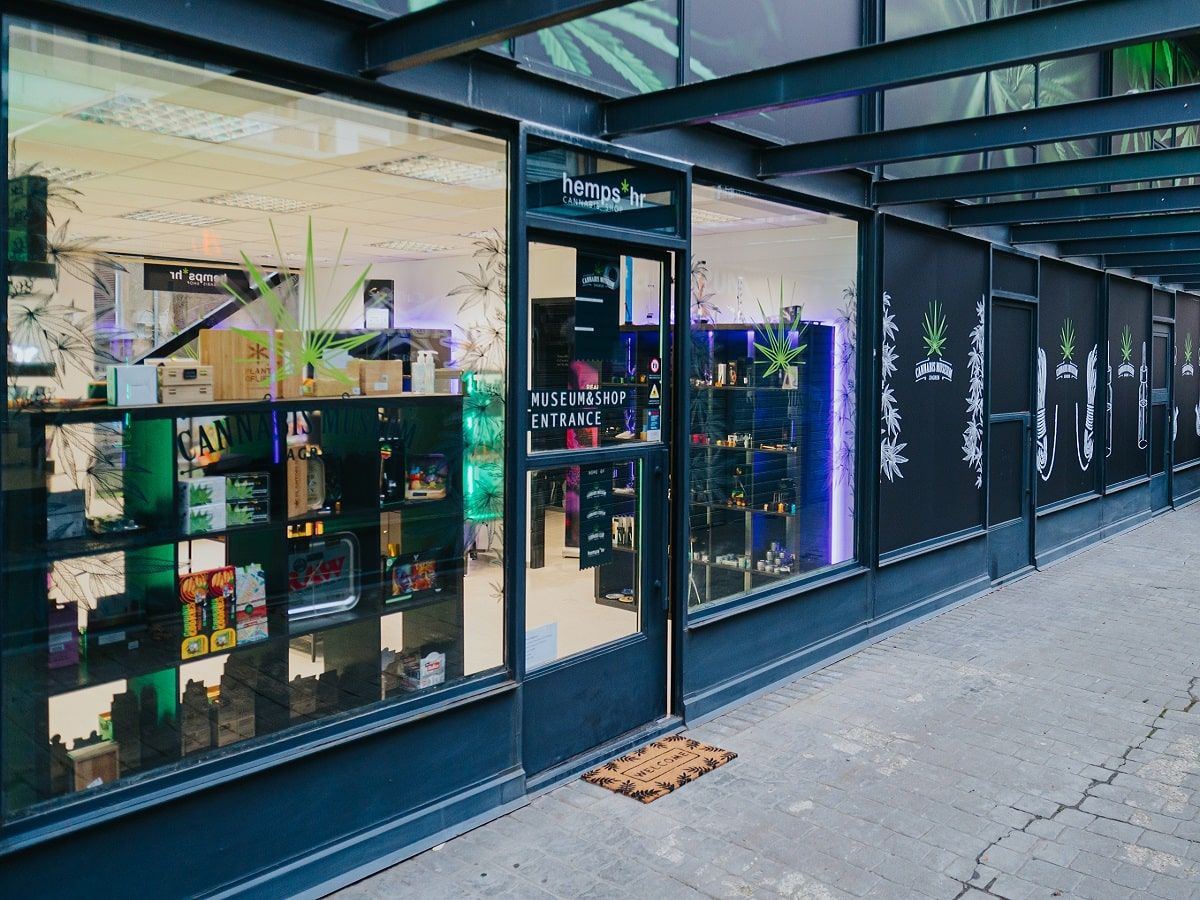
A museum dedicated to educating people about the cannabis plant recently opened in Zagreb, Croatia. The region was once one of the top hemp producers on earth, ranking 3rd globally as of 1949.

That obviously changed after Croatia declared its independence in 1991 and cannabis prohibition laws were passed. Cannabis is still illegal in Croatia, although personal possession is decriminalized and certain hemp products are now legal.

The company in Zagreb that opened the cannabis museum specializes in hemp products and launched the venue in an effort to educate people about the benefits of the cannabis plant.

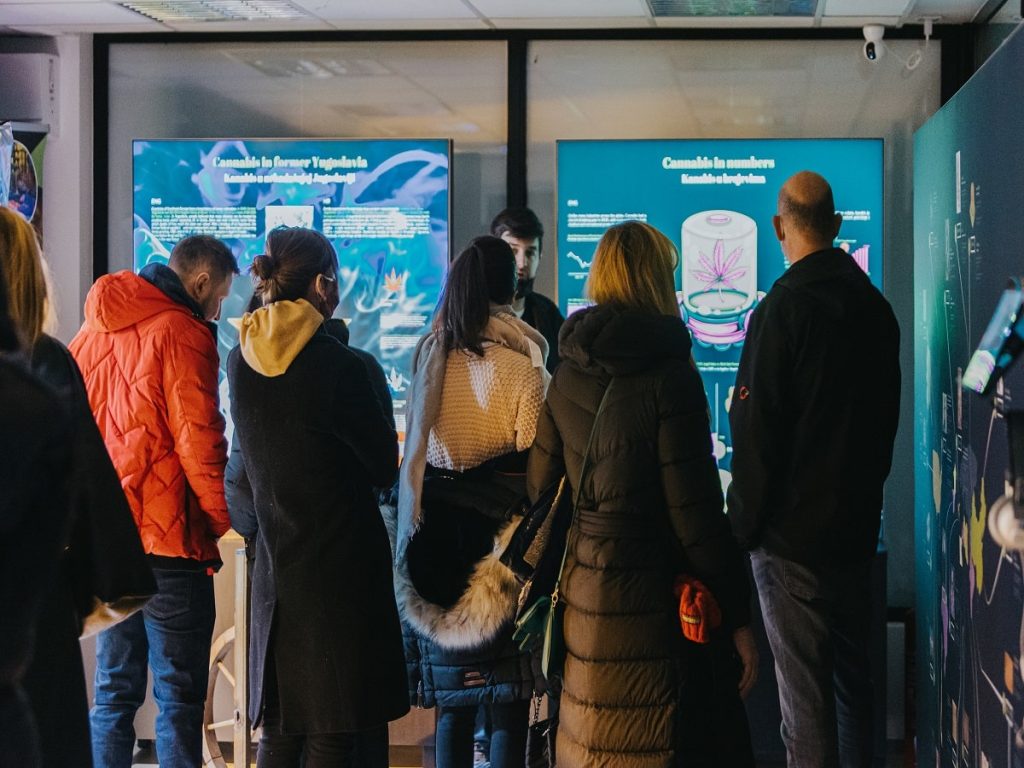
“Stretching over 4000 square foot, the museum presents a wide range of cannabis use and its benefits – including morphology, millennial history, cultivation, life cycle of the plant, as well as recreational, medical, and universal use of cannabis.” a museum press release stated.

According to the press release, admission for adults is $8 and the admission ticket itself doubles as a set of rolling papers and filter tips, meaning that museum patrons can literally use their ticket to consume cannabis, which is a really cool concept.

zagreb croatia cannabis hemp museum

What Else Does The Museum Feature?

The museum also “contains a rich variety of exhibits, and in several showcases, You can find the products from US and Canadian markets which can now be seen for the first time by the Croatian public. Even though, a majority of residents in States and Canada, take these products for granted.” according to the museum’s press release.

“Outside of the museum, various workshops, screenings, and panel discussions about Cannabis will take place in a nice environment.” the press release went on to say.

The museum is located at Radićeva ul. 15, 10000, Zagreb, Croatia, and is open 9 AM to 10 PM every weekday except Sundays. Sundays the museum is open from 12 PM to 8 PM.

I really like to see efforts like this within the international cannabis community and wish that every area was home to a cannabis museum. The more that we can educate our communities about the cannabis plant the faster cannabis prohibition will finally come to a complete end worldwide.

To learn more about the Zagreb Cannabis Museum visit their website at: CannabisMuseum.hr

croatia, museum

International Cannabis Business Conference

NEWS FROM AROUND THE GLOBE

BROUGHT TO YOU BY THE ICBC

© International Cannabis Chronicle. All rights reserved. Site developed and hosted by Rogue Web Works.